
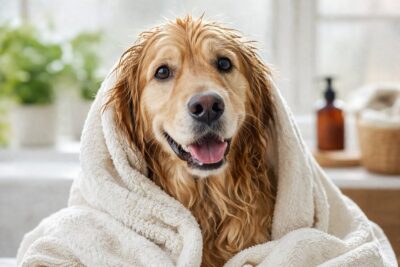
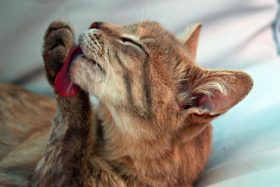
What’s the first thing your dog or cat does after a bath? Mine lick themselves clean. Yep, all those chemicals used in pet cleaning products go straight into your pet’s mouth. Lovely, huh?
Last Updated: Apr 2026
Yes, it was needed, so I did it. Just as my dogs are offered the healthiest food I can find and the most comfortable doggy bed, they now have an all natural soap, so natural that I would even use it on myself.
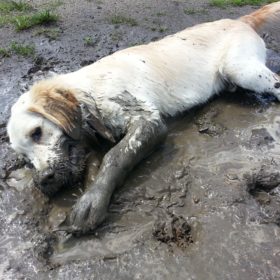
Fortunately, I don’t have to suffer through the task of bathing my dogs very often. But sometimes, it is just necessary. Pets are pets, and they do what they do best, which often leaves them very dirty.
Now, I know no one will believe me, but one of my dogs doesn’t mind baths at all. How do I know this? Because when it’s time for a bath, he just jumps right into the tub. No coaxing, no begging, no treats, just jumps right in. He even knows the word “towel.” Say it, and he comes running, ready for his bath and the post-bath rub-down where he buries himself in the towel and tries to take me down with him.
While that behavior may be unusual, his habit of licking himself clean after a bath is right in line with just about every pet I’ve ever met.
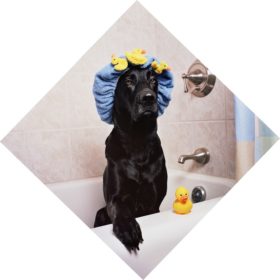
The problem here is that the standards for pet care products are weaker than those for human products, and the standards for human products aren’t very robust to begin with. Because of that, many products labeled for pets end up being sub-par. Manufacturers cut costs on raw ingredients and packaging, while increasing the use of questionable chemicals so the products perform well and can sit in a warehouse, then on a store shelf, for a very long time.
It seems that because something is labeled “for pet use only,” it isn’t scrutinized as closely as products made for people. But it should be.
Think about it. Not only will your pet put this product directly into their body as they lick themselves clean, but you are exposing yourself to it as well. Whether you are using your hands to wash your pet, inhaling the scent, or getting a second bath when your dog shakes off the water you just rinsed them with, you are part of that exposure.
Even if you take your dog to a groomer and someone else handles the ingredients, you still bring them home with you. The moment you pet your now “clean” dog or cat, those ingredients transfer right onto your skin too.
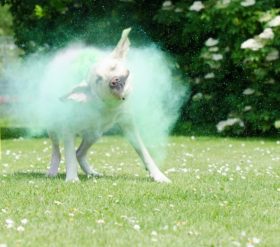
Pet products often contain unnecessary and potentially harmful added fragrances, stabilizers, and preservatives that you likely wouldn’t choose to use on yourself. Many of these fall under broad terms like “fragrance,” which can represent a mixture of dozens, sometimes hundreds, of undisclosed compounds. Yet you are using them every time you wash your pet. If you take your pet to a groomer, you may reduce your own direct exposure, but your pet is still being exposed to many unknowns. Most people don’t ask what products are being used, or what ingredients are in them, and many groomers don’t know either.
Your pet then brings those chemicals home on their fur and skin, and you are exposed as well when you pet them, let them on your furniture, or, for those who do, allow them to sleep in your bed. Skin contact and inhalation are both recognized routes of exposure for many of these compounds, which means this isn’t just a one-time event, but a repeated, low-level exposure over time.
Some of the chemicals found in pet products have been associated in the literature with skin irritation, endocrine disruption, and, in some cases, carcinogenic potential. Ingredients hidden under terms like “fragrance,” or preservatives such as certain parabens or formaldehyde-releasing compounds, have raised concerns in both human and animal care products.
Just because pets have fur doesn’t make them immune to absorption. In fact, certain areas of their body, like the belly, paws, and around the face, can be particularly vulnerable. The difference is that when your pet is unwell, they don’t understand what’s happening or why they keep going to the vet. They also can’t tell you when something feels off, which means it’s up to us to recognize the signs, hopefully before it’s too late.
One more thing to think about is scent. Dogs experience the world through their sense of smell in a way we simply don’t. What smells “clean” or pleasant to us can be overwhelming to them. Many pet shampoos are heavily fragranced, often with undisclosed ingredients hidden behind the word “fragrance.”
While that may make your dog smell better to you, it doesn’t necessarily mean it’s better for them. In some cases, strong scents can be irritating or simply unnatural for an animal that relies so heavily on its nose. Sometimes, clean doesn’t need to smell like anything at all.
That’s why it was important for me to develop an all natural soap that wasn’t just safe enough for my pets, but safe for me too. And there you have it. Furball pet soap is all natural, unscented, and safe. My confidence in it is so high, I would use it on myself.
When I say “real soap,” I mean soap made through a traditional saponification process, using oils and lye, not synthetic detergents or chemical surfactants commonly found in many commercial pet shampoos.
Pets do have different skin characteristics than we do, which is why not all products are interchangeable. That said, I still believe in a simple standard: if something isn’t safe enough for me, I’m not putting it on them either.
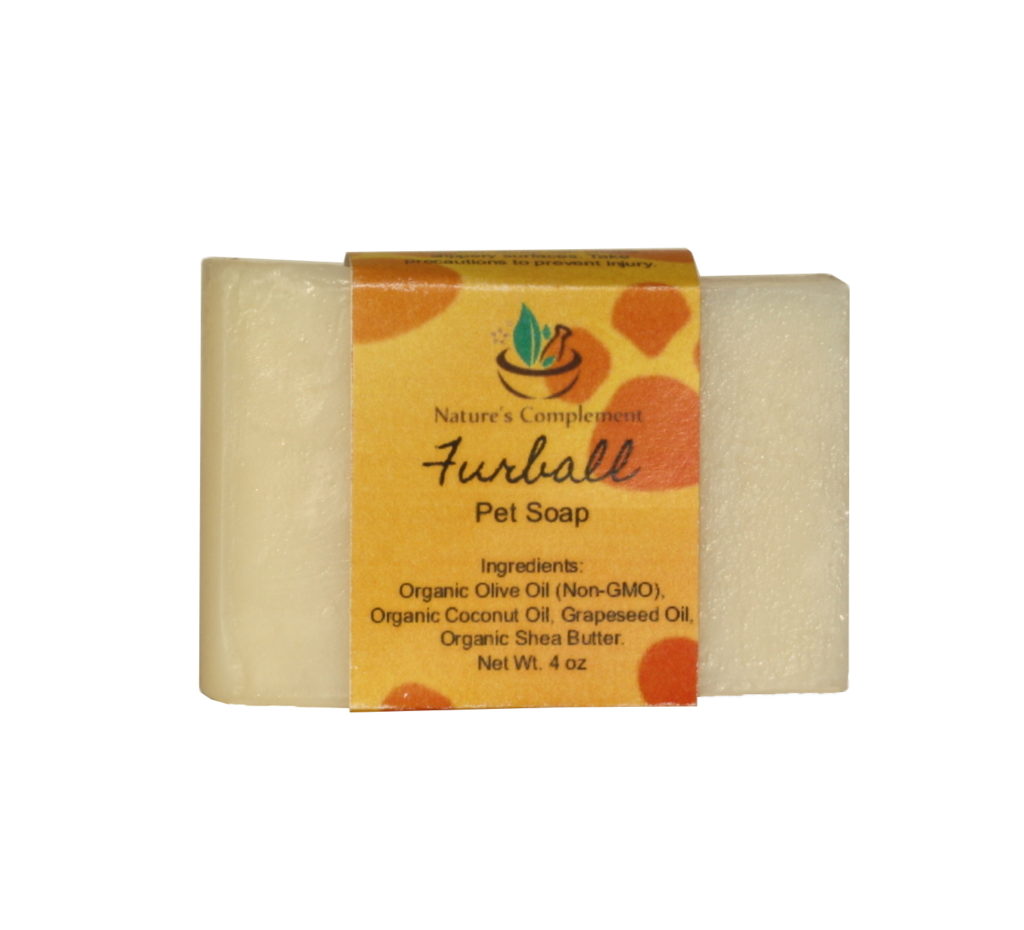
It is still real soap, and real soap can cause eye irritation, so keep it away from your pet’s eyes. Otherwise, get your pet in the tub, get them wet, lather with your safe all natural pet soap, rinse, dry, and you’re done.
Do note that an all natural pet soap will not behave the same as what you might be used to from store-bought products. On the first wash, it may feel different, almost as if it’s drying the fur, and you might feel the urge to add a conditioner. Don’t. Give it a chance. Let your pet dry naturally, and then feel the difference. Not only is their fur truly clean, but it often ends up softer once it dries, without any added chemicals.
For health,
Tober
Nature's Complement is a participant in the Amazon Services LLC Associates Program, an affiliate advertising program. If you purchase products on Amazon through any of our affiliate links, we get a small percentage of the transaction, at no extra cost to you. We spend a lot of time writing the articles on this site, and all this information is provided free of charge. When you use our affiliate links, you support the writing you enjoy without necessarily buying our products. (However we would appreciate if you would do that too!) Thank you for helping to support our work, however you choose to do so.
These statements have not been evaluated by the Food and Drug Administration. This information and/or products are not intended to diagnose, treat, cure or prevent any disease.