

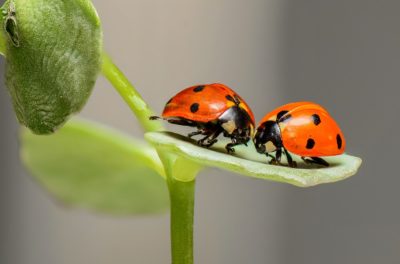
Nature Is Not the Enemy
Natural ecosystems should be, and can be, our ally—yet many of the products we use are designed to destroy them. We rely on bees, ants, and countless other pollinators to sustain our food supply, from fruits and vegetables to the plants that support entire ecosystems. Even insects most people would rather not think about play a critical role, breaking down decaying matter such as leftover food and even human waste.
Last Updated: Apr 2026
During my studies in entomology, I became fascinated by just how many essential functions insects serve. But as with most things in nature, there is a balance.
Alongside the benefits come the downsides, such as mosquitoes that spread disease, or wasps and horseflies that deliver painful bites. And that tension is exactly where the problem begins: we need insects to survive, yet we’ve been conditioned to try to eliminate them entirely.
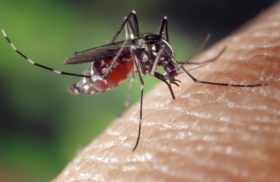
It’s a conundrum: we need insects, but we don’t want them on us—and for good reason. We want to continue enjoying foods made possible by pollinators, yet we have no desire to deal with mosquitoes, cockroaches, gnats, or houseflies. And we certainly don’t want to be bitten, or worse, exposed to diseases such as malaria, yellow fever, dengue fever, and many others.
Efforts to eradicate mosquitoes in endemic areas have not gone unnoticed and have, in many cases, been fairly successful. However, many people are unaware of what these efforts actually involve, or the long-term effects they may have on our planet—and on ourselves.
Truth be told, we don’t fully know everything that is being sprayed to control insects, although the science is improving. Treatments have been developed for many of the diseases transmitted by insects, and efforts to control populations by understanding their life cycles have also seen success, particularly by preventing insects from reaching their reproductive stage. However, these approaches often rely on methods that can impact other aspects of our lives and the environment, many of which we still do not fully understand.
For example, when DDT first came into widespread use, few realized that it would also harm birds (and potentially human health). The mechanism is complex, but it ultimately disrupts calcium metabolism in birds, leading to the production of thin eggshells that often break before the developing chick can survive.1 Fortunately, the ecological damage caused by DDT was brought to public attention by Rachel Carson’s book Silent Spring.2 At its peak, DDT use contributed to the near collapse of North American bald eagle populations.3 While DDT has since been banned in many countries, it is still promoted by some as a means of protection.
While DDT was initially effective as an insecticide, subsequent research has shown that many insect populations have developed resistance to it, reducing its effectiveness over time.4 Despite this, its persistence in the environment and potential harm to human health and ecological systems remain well documented.5
DEET is another problematic chemical. While it is not nearly as harmful as DDT, there are still human health concerns associated with its use. For example, topical DEET exposure has been associated with neurological effects such as seizures (especially in children),1,2 as well as insomnia and potential cognitive impairment.3 In addition, DEET can act as a solvent on certain plastics and synthetic materials, raising reasonable concern about its effects on human skin. Evidence shows that DEET can cause skin reactions ranging from mild irritation to more severe conditions, including blistering and ulceration, depending on concentration and exposure.4 So while DEET is an effective insect repellent, and it is widely considered safe when used as directed, it is not entirely without risk and may also carry longer-term environmental or ecological consequences.
On a related note, studies are beginning to reveal longer-term consequences that pesticides may have on plants themselves. When grown in pesticide-treated environments, some plants can lose their natural defenses against insects within just a few generations.6 For example, research on the evening primrose plant demonstrates this effect.
Despite the growing body of research, these chemicals continue to be used in large quantities and are often dispersed over wide areas through methods such as aerial spraying. This approach makes it difficult to control exactly where these chemicals ultimately settle. Compounds such as Naled, while restricted or banned in regions like the European Union, are still used in other areas, including parts of the United States—for example, in Florida during efforts to control the spread of Zika.7
My goal is not to create controversy, but to raise awareness that our use of insecticides comes at a cost. In nature, as in most aspects of life, there is no such thing as a free lunch. Mosquito control is undeniably important, and I would never question the need for disease prevention. However, it is equally important to recognize that these methods carry consequences—consequences for the environment, and for human health.
Biological systems—whether entire ecosystems or the human body—are both resilient and fragile. In some cases, they can compensate for chemical exposures; in others, those same exposures can be catastrophic. The challenge is that we often cannot predict which chemicals will fall into which category without extensive scientific research, including human and environmental toxicology. And more often than not, that research is conducted only after harm has already occurred. This reactive approach is difficult to justify, especially considering that “an ounce of prevention is worth a pound of cure.” On a related note, regulatory agencies such as the EPA and FDA do not always require comprehensive long-term environmental or human toxicology data before certain pesticides, herbicides, and fungicides are approved for use.
While studies suggest that certain concentrations of these chemicals are relatively safe, the reality is that we do not fully understand the extent of our cumulative exposure. These substances are not only applied directly to our skin, but are also present in our surrounding environment through widespread use. Over time, the combined impact of these exposures on human health—and on our planet—remains largely uncertain.
This is exactly why we developed an all-natural insect repellent. It is not designed to eliminate insect populations, but rather to work with nature by disrupting how insects perceive you. By affecting their olfactory system, it makes you less recognizable as a host, more like a plant, a tree, or something otherwise unappealing. This approach is effective in reducing the likelihood of insects landing on or biting you, while avoiding harm to you, the insects, or the environment. In that sense, it provides true refuge from the insects around you without the unintended consequences of more aggressive methods.
So what makes this approach safer? It comes down to the ingredients and how they work. Instead of relying on neurotoxic chemicals designed to kill insects, our formulation uses a blend of essential oils that naturally repel by scent. Oils like citronella, lemongrass, cedarwood, and rosemary have been shown to interfere with how insects locate hosts, making you less attractive to them without harming them in the process.8,9 The rest of the formulation is kept intentionally simple—witch hazel, glycerin, and supporting essential oils—without unnecessary fillers or synthetic fragrances. The goal is not to overwhelm the system with harsh chemicals, but to create an environment insects prefer to avoid.
This is a fundamentally different approach. Instead of killing insects and everything around them, it simply encourages them to stay away.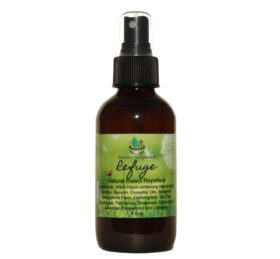
I first tested our Refuge insect repellent a couple of years ago while traveling in Central America. I used it alongside early versions of our Shield Sunscreen. After two weeks in insect-infested areas, I had exactly one bite—and it happened in my hotel room after I had already showered and washed everything off. That alone told me what I needed to know. Mosquito populations in parts of Central America are heavily controlled with chemicals, many of which I would rather not be exposed to, but they are still very much present, especially outside of major cities. And in those conditions, Refuge held up.
Other bugs were also a problem. One evening, I wore our Refuge insect repellent while enjoying dinner outside on the patio of our hotel room, and Rob decided to be tough and wore nothing. When we came back inside, he was covered in small bites. That’s when we learned about bugs called “no-see-ums.” Perfect name, because we didn’t see or feel them. But I didn’t have a single bite, and Rob was covered. I won’t claim our insect repellent is 100% foolproof, because it’s not—but that unintentional experiment made one thing very clear: it works.
While I’m not fond of bug bites, I am fond of insects. They play an essential role in our ecology and in our food systems, and for that reason, I have no desire to harm them. That is why I will continue to offer an all-natural insect repellent that works with nature, not against it. It may not be 100% effective every time, but it works well and is designed to be safe when used as directed. Just be sure to apply it thoroughly and combine it with other natural prevention methods for the best results.
For Health,
Tober
References:
1. Lundholm CE. Toxic effects of DDT on avian reproduction. Ambio. 1997;26(2):113–118.
2. Carson R. Silent Spring. Boston, MA: Houghton Mifflin; 1962.
3. U.S. Fish and Wildlife Service. Bald Eagle Recovery and Delisting. Available at: https://www.fws.gov/species/bald-eagle-haliaeetus-leucocephalus. Accessed 2026.
4. World Health Organization. Global Insecticide Use for Vector-Borne Disease Control. WHO; 2019.
5. Agency for Toxic Substances and Disease Registry (ATSDR). Toxicological Profile for DDT, DDE, and DDD. U.S. Department of Health and Human Services; 2002.
6. U.S. National Science Foundation. Plants lose defenses when shielded from insects. Available at: https://www.nsf.gov/news/news_summ.jsp?cntn_id=125636. Accessed 2026.
7. Centers for Disease Control and Prevention (CDC). Aerial Spraying for Mosquito Control and Safety. Available at: https://www.cdc.gov/zika/vector/aerial-spraying.html. Accessed 2026.
8. Nerio LS, Olivero-Verbel J, Stashenko E. Repellent activity of essential oils: A review. Bioresource Technology. 2010;101(1):372-378.
9. Maia MF, Moore SJ. Plant-based insect repellents: a review of their efficacy, development and testing. Malaria Journal. 2011;10(Suppl 1):S11.
Nature's Complement is a participant in the Amazon Services LLC Associates Program, an affiliate advertising program. If you purchase products on Amazon through any of our affiliate links, we get a small percentage of the transaction, at no extra cost to you. We spend a lot of time writing the articles on this site, and all this information is provided free of charge. When you use our affiliate links, you support the writing you enjoy without necessarily buying our products. (However we would appreciate if you would do that too!) Thank you for helping to support our work, however you choose to do so.
These statements have not been evaluated by the Food and Drug Administration. This information and/or products are not intended to diagnose, treat, cure or prevent any disease.