

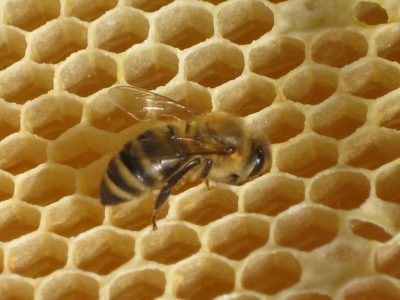
What You Don’t Know About Beeswax Processing, But Really Ought To: When I first started formulating my first personal care products, I started with face creams. After a few trials and errors, I was stunned. The feel of an all natural, preservative-free cream on my face was amazing. I was sad I started with such a small batch, and I immediately made a bigger one.
Last Updated: Apr 2026
I shared it with family and friends, and bragged about my skills. I even started to reduce my hatred toward my student loans, because after all, the education did come in handy for making these kinds of products.
Then I ordered more raw ingredients and made another batch. This one looked a little different. I was worried. Were the first batches a result of a glitch? A mistake I could not repeat? I re-read my notes and double checked my numbers. Something must have been wrong. I applied it anyway, and to my relief, the amazing soft feel of my new personal face cream was still there. The cream just looked a little different.
But why?
My scientific mind went into overdrive to figure out what happened. I made another batch, and another, and another. I shared with family and friends, most of whom did not notice the color, the change in aroma, or the other slight inconsistencies. But a few did.
The more I made and the more I tested, the more I realized that I will never have perfectly consistent results, though I finally figured out why.
The answer is simple, yet so complicated.
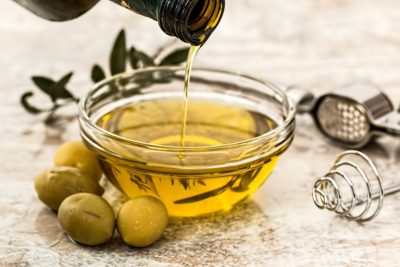
I will never have consistent results because my raw ingredients are not perfectly consistent. One might think that olive oil is olive oil, and it is, but how it is processed, how fresh it is, where it came from, and how it was handled can all affect how the final product looks, smells, and feels. Major producers often work very hard to make their products look the same from batch to batch, but that kind of consistency does not happen by magic. It happens through sourcing choices, processing choices, and standardization choices. And as a consumer, I think that matters.
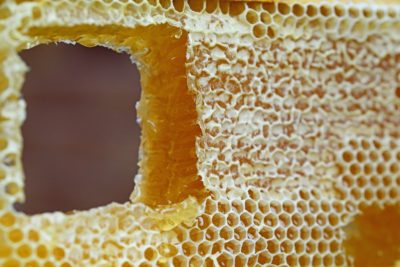
First, let’s talk about beeswax. Beeswax comes from different places, and it naturally varies. Its characteristics can differ based on forage, season, climate, storage conditions, and how the wax was handled before it ever reaches the person buying it.1 If you are interested in learning how bees actually produce beeswax, I found a great FAO resource on the subject. It is fascinating, and frankly, it made me appreciate bees even more.2
I learn something new every day. One of those things was that certain nectars can lead to honey that is toxic to humans. That does not mean all honey is dangerous, of course, but it does mean the bee’s environment matters more than many people realize.3 Wow.
I generally get my beeswax locally if I can. Sometimes I have to filter my own, based on what is available. But I do not go to the same beekeeper every time. Some small beekeepers just do not have enough to meet my demand, so I go to several beekeepers that meet my standards for how they raise their bees and how they handle their wax.
None of their beeswax is exactly the same. Some are darker, some are lighter. Some are more filtered than others. Some I have to re-filter, and some I do not. It all varies, and sometimes I do not know exactly what I will be getting in my next batch. But I continue this practice because I believe in supporting American farmers, beekeepers, and hard working people. I also continue it because there is limited information readily available to the average consumer about the full history of commercially processed beeswax. That information matters to me, because beeswax can reflect both the bee’s environment and the way the wax was later purified, filtered, bleached, deodorized, or otherwise standardized.

As a side note, the inconsistencies in raw ingredients are not limited to beeswax. I recently switched to a superior quality rose hip seed oil. This is the main ingredient in my soon to be famous L’Crème.
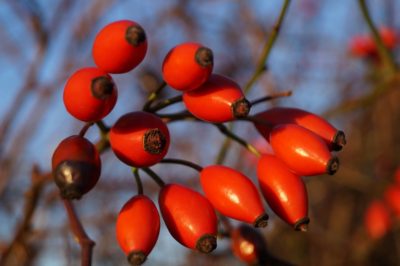
The rose hip seed oil I used to get was very good quality, but I did some research and found a better oil that is raw in comparison to my previously more processed one. The aroma is stronger and slightly different, and the color is much darker. I compared my old and new L’Crème and saw a huge color difference.
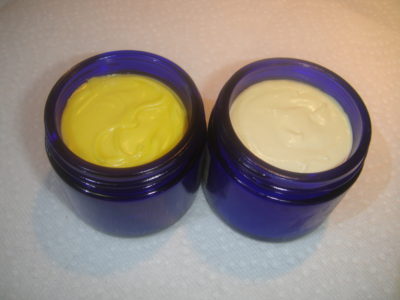
This immediately had me worried. So many of my customers are used to the original oil in L’Crème. Will they think I lowered the quality when they see the new color? Then panic set in and I questioned myself. Is the new rose hip seed oil going to change the consistency? The feel? The results? I immediately sent out samples to family and friends for testing, and the results were favorable. They liked the new darker cream. No difference in how it applies, for those that keep it refrigerated as they should, nor does it make their skin appear darker. They love it just as much as the old one. Only one person complained that they could no longer keep their cream out at room temperature, which you are not supposed to do anyway. Some even noticed better results in their skin. Yay.
Do not get me wrong, the recipe has not changed. The color and aroma have, all because I changed two variables. I switched to a rose hip seed oil that I researched to be superior to the old one, and I changed beeswax, again. The beeswax will always change, and while I try to keep all my raw ingredients as consistent as possible, reality is that perfect consistency is not possible if I want to continue making products from the freshest and purest raw ingredients I can find.
But this very detail brings me to question what tactics large manufacturers use to keep their products consistent, especially those that use beeswax as an ingredient.
After doing some research, I learned that freshly produced beeswax is naturally pale, whitish, or translucent, and that it darkens over time as it comes into contact with honey, pollen, propolis, brood activity, and environmental residues.4 In other words, the deep gold and darker shades people often associate with “natural beeswax” are part of the real life story of the hive.
Most small beekeepers filter their beeswax simply by using heat, settling, and filtration. I try to support those beekeepers, because I think that is the most natural way to filter. If I have to filter my own, I do so using a double boiler and a fine mesh filter similar to this one.
Not an easy or perfect process. I first leave it in hot water in a designated beeswax double boiler overnight, and sometimes I still have to re-melt the beeswax in the morning to filter out the rest of the propolis and fine debris. But I feel good knowing I am keeping the process simple and transparent.
When it comes to larger-scale processing, the natural approach does not always stop there. Depending on what the manufacturer wants, beeswax may be further purified, bleached, deodorized, pressure filtered, treated with adsorbents, or otherwise standardized to produce a more uniform material. Food additive references recognize both yellow beeswax and white beeswax, and specifically note that white beeswax can be produced by bleaching yellow beeswax with agents such as hydrogen peroxide or sulfuric acid, or even by sunlight.5 That was one of those moments where I had to pause and say: excuse me, what?
Because let us be honest. If you are just a regular person buying a jar of lotion or a lip balm, nobody is handing you a charming little backstage tour of the wax purification process.
There are different commercial grades of beeswax, including yellow and white beeswax, and the material can be handled in very different ways depending on the intended use. Some processors also blend or alter wax to make it easier to work with or to meet manufacturing specifications. That may benefit large-scale production. It does not necessarily benefit the consumer who wants a minimally processed ingredient.
Still sounds innocent, right?
When I first researched how beeswax is bleached, I read that sunlight could bleach it over time. Okay, that sounds natural enough. But large-scale production often relies on faster and more controlled methods than waiting around for sunshine. I know when I am filtering beeswax, I have to set aside serious time that is devoted to nothing but the beeswax. So it did not take much for me to suspect that industrial standardization would involve more than a sunny afternoon and good intentions.
So I dug further.
The Beekeeper’s Choices of a Bee’s Environment
First, there is the consideration of how the bees are raised. Bees are not immune to disease, pests, or environmental contamination, and how beekeepers manage those pressures can vary. This is too much to discuss fully in one article, but it is worth knowing that beeswax can accumulate residues from the hive environment and from some beekeeping practices.6
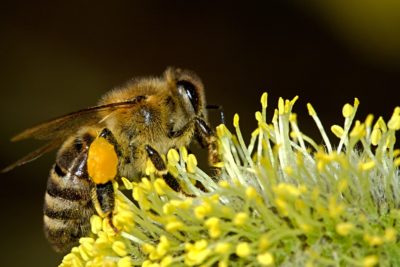
For example, some beekeeping references discuss the use of acids or other treatments in hive management and wax handling. That does not mean every beekeeper uses the same methods, but it does mean that asking questions matters. I would much rather deal with a local beekeeper and ask uncomfortable questions than assume all beeswax is equally clean just because it is sold as a “natural” ingredient.
Pollen, honey, and wax can all reflect the bee’s environment. Reviews of bee product contamination describe residues from pesticides, heavy metals, organic pollutants, and hive treatments, and several more recent papers note that beeswax acts as a kind of sink for lipophilic contaminants.7,8 That is one of the reasons I care so much about where my beeswax comes from.
Heavy metals can also be found in wax and wax foundations, especially where wax is recycled over long periods. One study specifically examined lead, cadmium, arsenic, and mercury during honeybee wax processing using casting technology.9 That does not mean every batch of beeswax is full of heavy metals. It does mean contamination is not a crazy thing to think about.
Not only can beeswax reflect how bees are raised, but so can the honey people eat. Reviews on bee-product contamination and so-called toxic or “mad” honey show just how much bee products can be shaped by floral source and environmental exposure.3,7 If those things matter for honey, I think it is perfectly reasonable to care about them for wax.
And there is additional research on beeswax contamination, adulteration, and decontamination that only deepened my suspicion that “beeswax” on a label tells you far less than most people assume.10,11
There are numerous considerations when it comes to a bee’s life and environment when making honeycombs, but I will return to focus on the filtration and processing of beeswax for now.
Filtering the Beeswax
It kind of seems like the people using heavily standardized beeswax are not eager to walk consumers through every detail of how that standardization was achieved. Fortunately, contamination of wax and the quality of beeswax are getting more attention in the scientific literature.
Chemical and technical references on beeswax make it clear that filtration and purification can involve more than simply melting and pouring. Some references describe pressure filtration, bleaching earths, activated carbon, and bleaching agents. Others also describe solvent-based extraction methods in technical literature. Again, I am not saying every manufacturer is doing every one of these things. I am saying that the processing possibilities are broader than most consumers realize.5,10
Gasoline is not something I want anywhere near my skin care products, and neither is xylene. Historical and technical literature discussing wax extraction methods mentions such solvents, which is exactly the kind of thing that reminds me why asking sourcing questions matters.10 That does not automatically prove meaningful residues are present in a finished cosmetic. But it certainly does not make me more relaxed about blindly trusting a supply chain I cannot see.
Xylene is a petrochemical solvent with well-established health hazards in occupational and toxicology literature.12 The same goes for carbon tetrachloride, which is now recognized as a hazardous chemical with serious toxicity concerns.13 So when I see old or technical wax-processing references describing harsh solvents and bleaching methods, I do not shrug and say, “Oh well, I am sure it is all fine.” I ask harder questions.
Some of the chemicals that may appear in technical descriptions of bleaching or purification include sulfuric acid, hydrogen peroxide, activated carbon, bleaching earths, and other processing materials.5,10 Sulfuric acid is a highly corrosive mineral acid. Hydrogen peroxide sounds friendlier to some people because it is familiar, but in industrial processing contexts that does not automatically mean “gentle.”
The point here is not that every processed beeswax ingredient is automatically dangerous. The point is that many consumers assume “beeswax” is a simple one-step raw ingredient, when in reality the material may have gone through a whole chain of choices, treatments, and purification steps before it ever reaches a cosmetic formulator.
Different companies will employ different methods. Some will use relatively simple melting and filtration. Some will use pressure filtration, adsorbents, bleaching, or other industrial refinements. Some will source wax that has already been standardized upstream. The more consistent and pristine-looking the material, the more questions I personally want to ask about how it got that way.
Activated charcoal and related adsorbent materials can be used in decontamination or bleaching-related processes, and there is also newer literature on industrial-scale decontamination of beeswax intended to reduce contaminants without dramatically changing the basic composition of the wax.11 That is interesting. But it still does not solve the transparency problem for the average consumer standing in a store aisle reading a label.
There are also practical details I could not easily find when researching beeswax handling. What containers were used? What contact materials were involved? How hot was the wax held, and for how long? Was it simply filtered, pressure filtered, adsorbent treated, deodorized, or bleached? I realized very quickly that once you are buying the final “raw” ingredient, a lot of this information is simply not handed to you.
Conclusion
One can easily get lost in the details and the endless hours of research it takes to understand the journey of our “raw” ingredients before they ever make it to our kitchens or our formulations. The deeper you delve, the scarier it can get sometimes. Not because every ingredient is toxic. Not because every manufacturer is careless. But because the modern supply chain is more complicated than most labels make it seem.
And yes, that bothers me.
Under U.S. cosmetic labeling rules, incidental ingredients such as certain processing aids may not have to be declared if they are removed, converted, or present only at insignificant levels without a technical or functional effect in the finished cosmetic.14,15 That does not mean the law requires no labeling at all. It means consumers still may not know every upstream detail of how an ingredient was produced or refined.
While other countries may restrict or evaluate some substances differently, here in America a lot of the burden still falls on the individual formulator and consumer to ask questions, read carefully, and decide what level of transparency they are comfortable with. I spent weeks researching and writing this article, and I feel like I only scratched the surface.
Thus, here at Nature’s Complement, we strive to maintain our traditions of safe, thoughtfully sourced products. All our ingredients are researched. Our producers are questioned. Our disclosures are upfront and honest. What we do not maintain, however, is laboratory-style visual sameness between products when that sameness would require unnecessary processing. The final products will not change without informing you, but we will continue to strive to improve the raw ingredients that we start with.
As the old saying goes, you get what you pay for. But here at Nature’s Complement, you are not paying for a picture-perfect illusion of consistency. You are paying for high quality products made with ingredients I have spent an unreasonable amount of time questioning, researching, and trying to source responsibly.
For Health,
Tober
References Cited:
1 Bogdanov S. Beeswax: Production, Properties, Composition, Control. Bee Product Science / Beeswax Book. Available at: https://www.researchgate.net/publication/304012435_Beeswax_Production_Properties_Composition_Control. Accessed March 22, 2026.
2 FAO. Bees and their role in forest livelihoods. Available at: https://openknowledge.fao.org/server/api/core/bitstreams/228e8e69-8b72-47d2-b1fe-f86f3ca69178/content. Accessed March 22, 2026.
3 Jansen SA, Kleerekooper I, Hofman ZL, et al. Grayanotoxin Poisoning: “Mad Honey Disease” and Beyond. Cardiovasc Toxicol. 2012;12(3):208-215. Available at: https://pmc.ncbi.nlm.nih.gov/articles/PMC3404272/. Accessed March 22, 2026.
4 Hassona NM, et al. Heavy Metal Concentrations of Beeswax (Apis mellifera L.) at Different Ages in the Northern Governorates of Egypt. Biol Trace Elem Res. 2023. Available at: https://pubmed.ncbi.nlm.nih.gov/37598395/. Accessed March 22, 2026.
5 FAO/WHO JECFA. Beeswax: Chemical and Technical Assessment. Available at: https://www.fao.org/fileadmin/templates/agns/pdf/jecfa/cta/65/beeswax.pdf. Accessed March 22, 2026.
6 Bogdanov S, et al. Contaminants of bee products. Apidologie. 2006;37:1-18. Available at: https://www.apidologie.org/articles/apido/pdf/2006/01/M5401.pdf. Accessed March 22, 2026.
7 Végh R, Csóka M, Decsi T, et al. Pesticide residues in bee bread, propolis, beeswax and royal jelly – A review of the literature and dietary risk assessment. Food Chem Toxicol. 2023. Available at: https://pubmed.ncbi.nlm.nih.gov/37121430/. Accessed March 22, 2026.
8 Bischoff K, et al. Pesticide contamination of beeswax from managed honey bee colonies in New York State. Environ Sci Pollut Res. 2023. Available at: https://pmc.ncbi.nlm.nih.gov/articles/PMC10621553/. Accessed March 22, 2026.
9 Tlak Gajger I, Kosanović M, Bilandžić N, Sedak M, Čalopek B. Variations in lead, cadmium, arsenic, and mercury concentrations during honeybee wax processing using casting technology. Arh Hig Rada Toksikol. 2016;67(3):223-228. Available at: https://pubmed.ncbi.nlm.nih.gov/27749267/. Accessed March 22, 2026.
10 Bogdanov S. Beeswax: Production, Properties, Composition, Control. See sections discussing purification, bleaching, and processing methods. Available at: https://www.researchgate.net/publication/304012435_Beeswax_Production_Properties_Composition_Control. Accessed March 22, 2026.
11 Navarro-Hortal MD, et al. Industrial-Scale Decontamination Procedure Effects on Beeswax Properties. Foods. 2019. Available at: https://pmc.ncbi.nlm.nih.gov/articles/PMC6514912/. Accessed March 22, 2026.
12 U.S. Centers for Disease Control and Prevention, NIOSH. Xylene. Available at: https://www.cdc.gov/niosh/npg/npgd0670.html. Accessed March 22, 2026.
13 Agency for Toxic Substances and Disease Registry (ATSDR). Carbon Tetrachloride. Available at: https://wwwn.cdc.gov/TSP/ToxFAQs/ToxFAQsDetails.aspx?faqid=663&toxid=123. Accessed March 22, 2026.
14 FDA. Cosmetics Labeling Guide — Incidental Ingredients. Available at: https://www.fda.gov/cosmetics/cosmetics-labeling-regulations/cosmetics-labeling-guide. Accessed March 22, 2026.
15 eCFR. 21 CFR Part 701 — Cosmetic Labeling. Available at: https://www.ecfr.gov/current/title-21/chapter-I/subchapter-G/part-701. Accessed March 22, 2026.
Nature's Complement is a participant in the Amazon Services LLC Associates Program, an affiliate advertising program. If you purchase products on Amazon through any of our affiliate links, we get a small percentage of the transaction, at no extra cost to you. We spend a lot of time writing the articles on this site, and all this information is provided free of charge. When you use our affiliate links, you support the writing you enjoy without necessarily buying our products. (However we would appreciate if you would do that too!) Thank you for helping to support our work, however you choose to do so.
These statements have not been evaluated by the Food and Drug Administration. This information and/or products are not intended to diagnose, treat, cure or prevent any disease.