
And why I don’t share my formulas.
Last Updated: Apr 2026
The actual development of a new product is much more involved than simply following a recipe. It requires research, experimentation, critical thinking, and in our case, some outside-the-box creativity to make products work without relying on toxic chemical ingredients. That means there is usually a defined process involved — not just mixing a bunch of ingredients together.
So I decided to explain what it really takes to bring a quality product to market. Because it’s not as easy as it sounds.
I know some of my friends have commented on how easy this seems to come to me, how I have all this knowledge about ingredients, chemical reactions, biological responses, and so on. But the truth is, I don’t really have all of that knowledge. Sure, I know a lot about common ingredients, relevant chemistry, and skin cell biology that we’ve researched over the years, and I can recite that information. But there are far too many compounds to know them all. I just happen to know where and how to search for information on a given topic. I’m no savant, that’s for sure. But I have spent enough years studying and researching that it may come a little easier to me than it does for non-scientists.
Truth be told, with hundreds of thousands of “natural” ingredients, chemical compounds, and combinations of these, it is impossible to know everything. When I first started my business, it was very small and consisted of only a few basic items that I made for myself out of necessity.
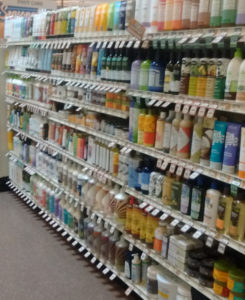
My research started with looking into the ingredients I found in store-bought soaps, shampoos, toothpaste, and similar products. Eventually we got smarter and stopped buying products first and researching them later. Instead, we began researching ingredients before ever purchasing anything.
This saved a good bit of money and led us to an important realization: very few products in the marketplace are truly healthy, natural, or even well researched. In fact, we came to the conclusion that many products are poorly formulated and survive in the marketplace largely because marketing has more influence on sales than product quality.
And that’s where the product development process begins. The following is the process we have developed here at Nature’s Complement:
1. Research the chemistry needed for a product to work
For example, what kinds of lipids are best used for different types of products? We covered this to some degree in our article “Understanding Oils & Fats For Health And Beauty” What ingredients are safe to stabilize a product, if any? What can I add to make a product smell good without compromising health and safety? We covered these questions in more depth in our articles “Personal Care Product Preservatives, and the Truth” Part 1 and Part 2. However, there are still many more ingredients we plan to cover in the future, such as phthalates, fluoride, and aluminum.
This type of research is first done independently by Rob and me on our own time. It includes evaluating peer-reviewed studies found on PubMed, searching various online MSDS databases, and reviewing industry databases. Sometimes, for basic starting points, we even check sources like Wikipedia. If we can’t find enough data there, we may also use Google Scholar.
I estimate this step takes about ten hours a week each for roughly four weeks before we both feel we have enough scientific literature to compare notes. So between the two of us, that comes out to about 80 hours for this part.

2. We compare notes
My research against his, his against mine. We review which books we referenced and what studies we found. Sometimes we agree, and sometimes we realize we need to dig deeper and do more research.
These turn into our “date nights” at home. Fortunately, we’ve discovered we actually enjoy them.
We spend a few hours a night for several nights in a row, sometimes an entire week, just comparing notes. Then we may spend another few hours a night for a couple more weeks doing additional research.
Altogether, let’s estimate this at about 40 hours between the two of us.

3. We formulate a variety of recipes to try
This includes deciding which ingredients we want to include and what percentages to attempt based on the research.
Fortunately, this phase only takes a few hours for the two of us, since by this point we’re already familiar with the ingredients we plan to use.
Sometimes we’re uncertain about ideal concentrations, so we look at percentages used in the research literature and use that as a guide, adjusting based on what we’re trying to create.
So let’s estimate about four hours each, for a total of eight hours for this phase.

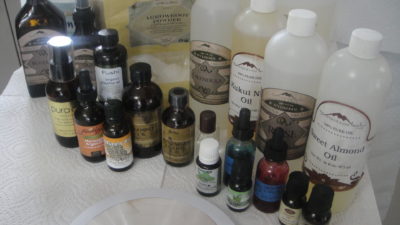
4. Now we have to find the ingredients
This means finding the right supplier and verifying everything about the ingredient. Where does it come from? Is it sustainably harvested? Is it produced organically? If not, what chemicals are used? Is it pure, or is it mixed with something else?
This is actually a very time-consuming process.
For example, when I was trying to find an organic source of astaxanthin, I realized very quickly that I needed to do some serious research. Products being sold as astaxanthin that are not actually astaxanthin are surprisingly common in the distributor world. In many cases, it’s simply a powder that looks similar, but is something entirely different. I had to teach myself how to recognize real astaxanthin based on the form it comes in. Then I had to find a reputable distributor who actually responds to inquiries and can provide an MSDS or equivalent documentation.
I also like to verify everything myself. You wouldn’t believe how many raw ingredients are claimed to be pure, only to arrive with additional, unwanted ingredients.
I also check whether ingredients are at risk of being genetically modified. If they are, I contact the manufacturer to determine the source and the process used to isolate and produce the ingredient. Sometimes manufacturers don’t respond. Other times they send convoluted technical sheets that require multiple readings just to fully understand.
At that point, I’ve either found a reliable source or I have to start the process all over again.
This research time varies significantly. For example, finding a good source of non-GMO citric acid took about a day of research, followed by another day of communication and verification, so roughly 16 hours.
But the astaxanthin I mentioned earlier was a completely different story. I spent a solid week on initial research, only to realize the distributor I was considering was not fully transparent. That meant starting over. In total, I spent about two full weeks of nonstop research on that single ingredient — and I’m still not even sure if I’ll use it in a future formulation.
Once the ingredients are ordered and paid for, we wait for them to arrive. During that time, we go back and double-check our recipes to determine how many different formulas we want to test.
When the ingredients finally arrive, we test them, compare them, and evaluate them as best we can to confirm that we ordered from the right source and that the ingredients are actually as pure as claimed.
To make the math simpler, I decided to average a difficult ingredient with a simpler one. Using the astaxanthin example, let’s estimate eight hours a day, seven days a week, for two weeks. That comes out to about 112 hours. On the other hand, the citric acid example took about 16 hours. Averaging those gives roughly 64 hours per ingredient to find a quality source.
And don’t forget, this process doesn’t always end there. Sometimes manufacturers disappear for one reason or another, and I have to repeat the entire process to find a new supplier.
5. Developing the formula
This part gets tricky. Sometimes we have ten different formulations ready to test, and other times we have to go back and figure out how to properly dissolve specific ingredients in the right carrier.
This is actually the longest part of the development phase. We often have to wait for things to heat up, then cool down, then try alternative methods of mixing, infusing, or adjusting the process. The actual production and R&D can get complicated quickly.
On top of that, we choose to follow good laboratory practices (GLP/GMP). That means repeatedly sterilizing our equipment and keeping meticulous notes on every step of the process.
Things go wrong. Recipes don’t turn out as expected. Sometimes we have to go back to the formula to figure out what happened and how to fix it. That often means going back into the literature, reviewing notes, and troubleshooting until we get it right.
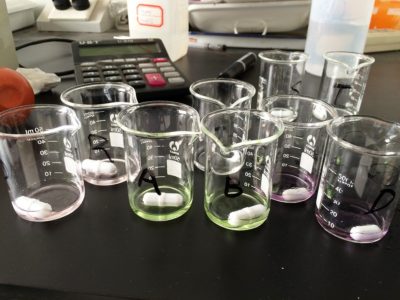
On average, each product goes through about ten different formulations before we reach something that even begins to resemble the final product. After that, the fine-tuning phase can be just as challenging.
For example, our dish soap has gone through five different formulations so far, and we are finally at the point where we are fine-tuning. That means we’ve decided on the final ingredients, and now it’s a matter of adjusting exact amounts. 1 oz? 1.1 oz? 1.15 oz? As you can see, this can get tricky, expensive, and very time-consuming.
I started tracking the time spent developing our dish soap and sunscreen, and they are surprisingly close. That said, this is actually our second round of sunscreen development, since the first version included an ingredient whose supporting research was later withdrawn, which led us to reformulate.
So far, we have spent at least two months developing the dish soap and at least four months on the sunscreen, doubled when you consider the second round. Some days, it’s just a matter of mixing ingredients we discussed the day before, which might take an hour. Other days, we are working through infusion methods or formulation challenges that take an entire day.
If we assume an eight-hour workday, five days a week, that would put dish soap development at roughly two months of work for both of us, and sunscreen at about four months each. And we’re still not done. Both are in their final phases, but not complete.
In reality, we also have other aspects of the business to manage, so we are not working on formulations full-time. Taking that into account, a reasonable estimate is that it takes two people about three months of part-time work to develop a single product. I estimate that at roughly 500 hours between the two of us.
That may seem like a lot to someone who casually puts together homemade products. But we are developing commercial-quality, professionally formulated products, and we want to make sure they perform as intended.
If we were to simply follow a standard commercially available formula, we would be no different than many large manufacturers who prioritize scalability and shelf life over formulation integrity. Cosmetic regulations allow significant flexibility in formulation, often relying on manufacturer responsibility rather than strict pre-market approval requirements.
6. Packaging
You wouldn’t think this takes much time, but it does.
We prefer glass whenever possible, but sometimes that’s not practical, so our second choice is HDPE plastic. Fortunately, manufacturers are usually very good at documenting what materials their containers are made from.
At that point, it becomes a balance between what we want and what’s actually available. What starts as “what kind of look do we want” quickly turns into “what kind of look are we willing to settle for based on what exists in the materials we prefer.”
Then we order samples and test the jars or containers to make sure they function as they should.
This part doesn’t take long in terms of actual work. Most of the time is spent waiting for samples to arrive. So let’s estimate about a day for research and a day for testing, or roughly 16 hours total.
7. Cost analysis
This one is not pretty.
Not only do we have to consider the cost of raw ingredients, but also the cost of jars, labels, and our time. As you can see from the hours adding up, much of our work has essentially been “volunteer” time, because I can’t realistically charge my full time investment for something like a bar of soap.
At the same time, I still have to make sure we’re not taking a loss on the actual product. That’s easier to do than you might think once everything is added up, especially when you realize you don’t want to charge your customers $10 for a single bar of soap.
Thankfully, I’m good with numbers and can usually work through the cost breakdown in a couple of days. This includes updating spreadsheets, tracking receipts, and adjusting website pricing.
So let’s say I’m having a really productive couple of days and estimate about 16 hours for this phase.

8. Product testing.
This phase is fun for me. This is where I get to give out samples to my trusted testers and evaluators and patiently wait for their feedback. Sometimes I come up with a questionnaire for them to fill out, and other times, when I feel really good about something, I just let them offer whatever opinions they have. This usually requires a few lunches with friends, some phone calls, emails, and follow-up calls for further questions.
This time is really hard to judge, because everyone else is doing the work at this stage and I’m mainly collecting feedback. It’s also done sporadically over a few weeks. So I’ll go easy on the time here and just count the time to create the questionnaire (about an hour), make the samples (at least two to three hours), and gather and evaluate the results (about four hours). So my time in product testing we’ll estimate at eight hours.
This, of course, doesn’t include my own personal testing, since I’m evaluating the products alongside my testers.

9. Final Details
Once all the feedback has been gathered, we decide if we want to alter the formula and go through testing again, or keep it as is. In this scenario, we’ll pretend we came out with the perfect product and nothing needs to be changed.
The next step is naming the product, designing and creating the label, writing instructions and warnings, checking the FDA website to make sure we are compliant, etc. If you’ve seen some of my labels, you know I take this job very seriously. This isn’t just slapping a name on a jar. Every word matters. Every claim has to be thought through. Every ingredient has to be disclosed properly.
Then we have to finalize the label, print it, and apply it to the jar. Getting that final label to production takes a minimum of two full days, including editing. So we’ll go with 16 hours, including Rob’s time.

10. Sell the final product.
To take this process a step further, we then have to actually get the product in front of people. That sounds simple. It’s not.
At one point, we tried getting our products into retail stores. What I didn’t realize at the time is that there’s a whole separate game involved just to get shelf space. It’s not just about having a good product. It’s about relationships, persistence, pricing structures, margins, packaging expectations, and sometimes things that have nothing to do with the quality of what you’ve made. That alone can turn into a full-time job.
We eventually stepped away from that route. Not because it isn’t valuable, but because it pulls us too far away from what we actually do best—formulating and creating products.
We also used to sell across multiple platforms, including Amazon and Etsy. But keeping up with multiple marketplaces, each with their own systems, rules, and inventory tracking, quickly became overwhelming. Instead of helping the business, it started taking time away from it.
So we simplified. Today, we sell directly through our own website.
Even with that simplification, people still have to find us. That means continuing to put ourselves out there, maintaining the site, answering questions, and building trust with customers over time. None of that is passive, and none of it is instant.
And none of this includes the actual production of the products once they’re sold.
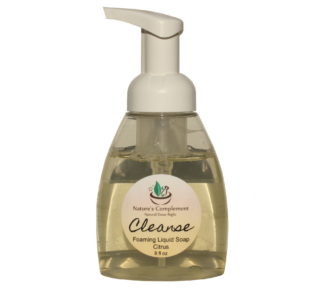
So there you have it. This is what it takes to bring a quality product to market.
My estimates come out to roughly 800 hours—not including marketing or ongoing product production—just the development process from concept to something ready to be sold. I say “estimates” because different products take more or less time depending on the ingredients, the end goal, and how much research is required. Some things we already know, like which oils we prefer to use in our lotions. Others send us right back to the drawing board.
But even with that variability, we’re still looking at about five months of full-time work to develop a single product.
Maybe I’m wrong, but that’s a lot of work to just give away. And that’s why I don’t.
I think many people don’t realize the amount of time, effort, and money that goes into developing products that are both safe and effective. That combination alone has become a rarity.
 This, of course, doesn’t include the financial cost or the years of time invested in our education—gaining the knowledge, skills, and experience needed to do the kind of research required to bring real, high-quality products to market.

It doesn’t end there. That’s just developing the product. Running a business means there is always more work to do—marketing, product and sample production, website development and maintenance, exposure at events, and more.
Now, if you’re just making something for your own personal use, you can skip a lot of that. You don’t need to worry about jar research, label design, compliance, or marketing. But by now, you can probably see why I don’t just openly post my formulas on my website for anyone to copy.
What most people see is the final product. What they don’t see is the time and work behind it. From the outside, it might look like something quick and easy for me to do. I can assure you, it is anything but.
And yes, there are manufacturers out there that will provide formulas for you. Some even offer standard, ready-made recipes to get you started. But in reality, that’s exactly what we at Nature’s Complement are trying to avoid.
Those standard formulas are typically built around synthetic chemicals, emulsifiers, thickening agents, fragrances, and preservatives designed to replicate products already on store shelves. They look the same, feel the same, and “function” the same—but they often come with the same concerns we’ve been trying to avoid from the beginning.
Making more cheap, mediocre, questionable products is not our goal. Anyone can do that.
Our goal is to create the highest-quality products that are not only safe, but effective—without unnecessary ingredients—and still affordable to most people. The type of personal care products we create are unlike most of what you’ll find on store shelves. Our formulations contain research and development that no generic, “off-the-shelf” formula could hope to replicate.
Frankly, this kind of development is not easy. It’s not quick. And it’s not something everyone is willing—or able—to do. Because as far as I can tell, no one else is taking the latest research, carefully evaluating it, and bringing it all together into a single, thoughtfully designed product.
So no, I won’t give out my formulations. But here’s what I will do:
- I will always provide full disclosure of every ingredient in each product.
- I will always seek out and use the highest-quality raw ingredients I can find.
- I will never include ingredients that are clearly harmful or backed by questionable data.
- I stand by my products 100%.
- I will continue to provide free information through the articles on our website, along with references so you can see exactly where that information comes from.
I hope this article brings some clarity to what it actually takes to bring truly innovative, high-quality products to market, and helps explain the value our products offer compared to the countless generic “me too” products found in stores.
The reality is that most of those products are not formulated with your health in mind. They are often built around cheaper, more convenient ingredients—designed for long shelf life and maximum profitability. And all too often, that comes with little regard for consumer well-being.
The shortcomings in those formulations are then masked with slick marketing and polished advertising, creating the illusion of quality.
It’s an unfortunate reality. But that’s exactly what sets Nature’s Complement apart.
We don’t operate that way. We operate with integrity. And we put people’s health first.
Because at the end of the day, what you put on your body matters—and so does how it’s made.
For Health,
Tober
Nature's Complement is a participant in the Amazon Services LLC Associates Program, an affiliate advertising program. If you purchase products on Amazon through any of our affiliate links, we get a small percentage of the transaction, at no extra cost to you. We spend a lot of time writing the articles on this site, and all this information is provided free of charge. When you use our affiliate links, you support the writing you enjoy without necessarily buying our products. (However we would appreciate if you would do that too!) Thank you for helping to support our work, however you choose to do so.
These statements have not been evaluated by the Food and Drug Administration. This information and/or products are not intended to diagnose, treat, cure or prevent any disease.