

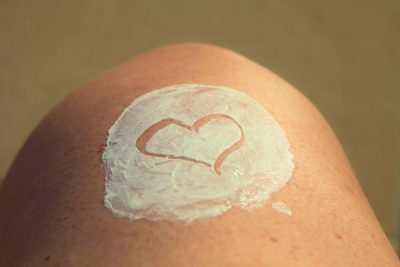
SPF is neither a number to take lightly, nor one you should blindly rely on. There’s more to it than a label that gives the impression of how much protection you’re getting from the sun. But what does that number actually mean? And how do manufacturers determine what that number should be?
Last Updated: Apr 2026
Let’s start with what SPF actually is. It stands for Sun Protection Factor, and it’s determined through an FDA-recognized laboratory procedure using a minimum number of human test subjects—typically at least ten people.1 Yes, that surprises a lot of people, but SPF testing is done on actual human skin, not animals, because the endpoint being measured is how skin responds to UV exposure. This testing must be conducted by qualified labs following standardized protocols, and it isn’t cheap—costs can range from around $2,500 to well over $10,000 depending on the scope, such as testing for water resistance or broad-spectrum (UVA and UVB) protection.
The most basic test used to determine an SPF value (such as SPF 15 or SPF 40) requires consistent results across multiple human subjects who are exposed to controlled UV light for defined periods of time.2 Once that testing is completed and meets FDA criteria, an SPF value is assigned to that specific formulation—and only then can a manufacturer legally label the product with that number. That said, this doesn’t guarantee that every product on the market has been tested as thoroughly as it should be. Regulations require proper testing, but enforcement isn’t perfect, and independent testing has shown that some products do not perform at their labeled SPF. In addition, very high SPF claims—such as SPF 100—largely reflect older labeling practices that have since come under increased regulatory scrutiny rather than a meaningful increase in real-world protection.
With that said, I want to clear up a common misunderstanding I see—especially among small businesses making their own personal care products. There is research showing that certain ingredients can contribute to UV protection, but that does not mean their effects are additive in a simple way. An ingredient with an estimated SPF of 10 combined with another at SPF 5 will not necessarily result in an SPF 15 product. It just doesn’t work that way. In a finished formulation, ingredients can interact, dilute each other’s effectiveness, or work through overlapping mechanisms, meaning the combined result is often very different from what you might expect on paper.3 There are many reasons for this, but the key takeaway is simple: SPF cannot be reliably calculated from individual ingredients—it has to be tested on the final product.

So the only way to know the actual SPF of a product is to invest in proper testing—send it to a certified lab and get verified results. As mentioned earlier, that process isn’t cheap, which is why we don’t list SPF values on most of our products. Not because they offer no protection, but because we won’t put a number on a label unless it’s been formally tested. Our Shield Sunscreen is the exception, because we chose to invest in that testing for that specific formulation.
But what does SPF really mean in practical terms? Do higher SPF values actually offer better protection? Is SPF 40 really that much better than SPF 25? And are there any products that can protect you from the sun completely? The answer, unfortunately, is not a simple yes or no. This topic gets complicated quickly, and even guidance from the FDA can be difficult to interpret if you’re not used to reading regulatory language. I won’t be able to cover every detail here, but I’ll break down the basics so you can make more informed decisions. If you’re trying to decide whether you even need sunscreen—or what makes a good one—you can read our full article on that here.
What does that SPF really mean?
Per the FDA, Sun Protection Factor is determined through controlled laboratory testing in which a minimum of ten human subjects have a measured amount of sunscreen applied to a defined area of skin, followed by exposure to a standardized UV light source for specific time intervals.4 The testing process is carefully structured, and the lab must have an estimated SPF range before testing begins so that exposure times can be set appropriately. For ethical reasons, subjects cannot simply be exposed to maximum UV levels to see what happens. Instead, exposure is increased in controlled steps, making an estimated SPF value necessary before testing starts.
Once testing is complete, the lab evaluates the data to confirm it meets FDA requirements. If it does, an SPF value is assigned to that exact formulation. This process is also performed alongside a standardized control to ensure the test conditions are valid and consistent. In our case, the control used during testing was a padimate and oxybenzone standard, which is used to verify that the UV exposure and testing conditions are functioning as expected.
This process is far more complex than I’m making it sound. There are many variables that have to be carefully controlled during testing, including skin type, subject selection, the light source being used, calibration of the equipment, and even factors like proper warm-up time for the UV lamps. These details matter because small variations can affect the outcome. Fortunately, certified testing labs have standardized protocols in place and have refined this process over time, so once you send in your product, the heavy lifting is handled for you.

Once testing is complete, the lab compiles a report with all required data, and if the results meet FDA criteria, an SPF value is assigned and permitted to be listed on the product. So what does that number actually represent? It reflects how much UV exposure is required to produce minimal redness on protected skin compared to unprotected skin under controlled conditions.5 In other words, it is based on a comparison, not the complete absence of redness.
The testing process generally follows these steps:
1. A specific amount of sunscreen is applied evenly over a defined area of skin using standardized dosing.
2. The treated skin is exposed to a controlled UV light source at a standardized intensity, with multiple test sites receiving different exposure durations.
3. The same procedure is performed on adjacent sites using a control sunscreen with a known SPF value to ensure the test conditions are valid and consistent.
Does a higher SPF mean more protection?
You’ll often see claims that higher SPF numbers provide a greater percentage of protection. For example, values are commonly cited such as about 93% protection for SPF 15, around 97% for SPF 30, and about 98% for SPF 50.6 While those numbers are generally based on how much UVB radiation is filtered, the difference between them is much smaller than most people expect. An SPF 50 product does filter more UVB than an SPF 15, but not dramatically more in real-world terms.
It is also worth noting that very high SPF values, such as SPF 100, have been the subject of increased regulatory scrutiny because they can give a false sense of complete protection. The FDA has proposed stricter requirements and limitations around labeling these higher values, not because they are meaningless, but because the added benefit becomes progressively smaller as the number increases.7
However, I remain skeptical of how SPF values are often translated into percentages of protection. While you will commonly see those percentages presented as if they are directly measured, the FDA testing method does not actually measure “percent UV blocked” as a standalone endpoint.8 Instead, SPF is determined by comparing how much UV exposure is required to produce minimal redness on protected skin versus unprotected skin under controlled conditions.
All certified labs follow a standardized protocol defined by the FDA, where the intensity of the UV light source is kept consistent and the variable that changes is the duration of exposure. In other words, the test increases total UV dose by increasing exposure time, not by increasing the strength of the light itself. Because of this, SPF is fundamentally a measure of how much additional UV exposure the skin can tolerate before burning under those controlled conditions. While this does reflect a level of UVB protection, it is not a direct measurement of percentage blocked, and it does not fully capture how a product will perform under real-world conditions.
So when the FDA, or anyone else, presents SPF as both a measure of duration and a precise percentage of protection, it’s important to understand the limitations behind that interpretation. SPF testing does show that higher values correspond to increased UVB protection, but the percentage figures often cited are derived from the test method rather than directly measured as a standalone outcome.9 In other words, they are calculated interpretations, not something the lab is explicitly measuring in isolation.
I tend to think of this as the part of the conversation that doesn’t get enough attention. The testing method increases total UV exposure by extending time, not by increasing light intensity, and from that, conclusions about percentage of protection are inferred. While those inferences may be useful for general understanding, they should not be mistaken for precise, real-world guarantees. At the end of the day, the lab data tells us how a product performs under controlled conditions, and that does not always translate cleanly into how it performs outside of them.

The way SPF is tested does have practical implications. While higher SPF products do provide greater UVB protection, the difference between them is not as exepcted, especially outside of controlled conditions.10 An SPF 40 product does filter more UVB than SPF 15, but that added protection can be reduced quickly in real-world use due to sweating, swimming, friction, and how much is actually applied.
A more useful way to think about it is consistency rather than chasing higher numbers. Sunscreen effectiveness depends heavily on how it is applied and how often it is reapplied. Over time, sunscreen wears off, breaks down, or is removed from the skin, which reduces its effectiveness. This means a lower SPF product that is applied properly and reapplied consistently can provide comparable real-world protection to a higher SPF product that is applied once and left on too long.
So what should you look for in an SPF?
SPF numbers don’t mean much if your sunscreen isn’t staying on your skin. If you’re sweating, swimming, or wiping it off throughout the day, its effectiveness drops quickly. So what really matters is not just the SPF value, but whether the formula performs well under real-world conditions and is something you’re comfortable using consistently.
This is where things get more complicated. Some higher SPF products rely on chemical UV filters, and while many are considered safe within current regulatory limits, some have raised concerns related to skin absorption, irritation, or environmental impact in ongoing research.11 That doesn’t automatically make them dangerous, but it does mean it’s worth paying attention to what’s in your sunscreen, not just the number on the front.

Another important factor that often gets overlooked is how much sunscreen you actually apply. In laboratory testing, SPF is determined using a very specific application thickness, typically 2 mg per cm2 of skin, applied evenly across a defined test area.12 Labs use precise methods to measure this, such as syringes or weighing the product, to ensure consistent and uniform coverage.
The problem is that most people do not apply sunscreen this way in real life. Instructions usually say to “apply liberally,” but they do not explain what that actually means in measurable terms. As a result, many people apply significantly less than what is used in testing, which can lead to much lower protection than the labeled SPF. In other words, even if a product is tested at a certain SPF, you may not be getting that level of protection if you are not applying enough.
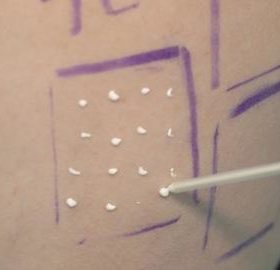
There are also differences in individual skin types and everyday activities that affect how sunscreen performs. While laboratory testing uses controlled UV lamps designed to simulate sunlight, test subjects are carefully selected and must meet specific criteria.13 Individuals with certain skin conditions, irregularities, or factors that could interfere with results may be excluded. Participants are also given strict instructions, including avoiding photosensitizing substances and certain medications that could influence skin response.
Real life is not that controlled. If you are exercising, sweating, or wiping your skin, your sunscreen is unlikely to last as long regardless of the SPF rating. Time spent in direct sun versus shade matters. The amount and type of product you apply can change how long it remains effective. Medications, environment, elevation, humidity, and even time of year all play a role. There are simply too many variables outside the lab to assume the labeled SPF will perform the same way in everyday use.
So what you have to remember is this: that SPF number has the most meaning under controlled laboratory conditions. Once you move outside of those conditions, real-world performance can vary, sometimes significantly. Even though SPF testing is designed to create an apples-to-apples comparison between products, factors like application, environment, and formulation differences can lead to very different results in everyday use.
See where I’m going with this? The best thing you can do to protect yourself from the sun is to limit exposure in the first place. Wear hats, long sleeves, and seek shade when possible. If you are going to be in the sun, choose a sunscreen you are comfortable using consistently, apply it properly, and reapply as needed. Rather than focusing only on higher SPF numbers, it is just as important to pay attention to the ingredients and how the product performs for you, especially if you have sensitivities or concerns about certain compounds.14

What you eat can play a role as well. Some research suggests that certain plant compounds may help support the skin’s natural defenses against UV damage. For example, one study found that combinations of citrus and rosemary extracts showed protective effects against UV-induced damage in both cell models and human subjects.15 That does not mean these foods replace sunscreen, but it does suggest that diet may offer an additional layer of support when it comes to how your skin responds to sun exposure.

Sunscreen versus “Sunblock”?
To clarify, the terms “sunscreen” and “sunblock” are often used to describe two different types of UV filters, but officially, the FDA classifies them all as sunscreens.16 What people are usually referring to is the difference between chemical filters and mineral filters. Chemical sunscreens absorb UV radiation and convert it into a small amount of heat, while mineral sunscreens, such as zinc oxide, primarily reflect and scatter UV radiation, although they also absorb some of it. A helpful way to think about it is that chemical sunscreens act more like a filter, while mineral sunscreens act more like a physical barrier.
Even so, no sunscreen provides 100% protection. Studies have shown that even physical barriers like shade structures or umbrellas do not completely block UV exposure due to reflection and scattered light.17 That means no matter which type you choose, additional protective measures still matter.

Read the Label
Sun protection is important for everyone, but whatever type of protection you choose, you still need to do your homework. Turn the tube around and read the full ingredient list, both active and inactive. Not all active ingredients are equal, and some have raised concerns related to skin absorption, irritation, or environmental impact. For example, ingredients such as avobenzone, oxybenzone, octinoxate, octisalate, homosalate, and octocrylene have been studied for systemic absorption and other potential effects, although research is still ongoing and not all conclusions are definitive.18
Inactive ingredients matter too. Preservatives and stabilizers are often added to extend shelf life, but some have been associated with skin irritation or sensitivity in certain individuals. We go into more detail on those in our part I and part II articles on preservatives, but the key point here is simple: don’t just look at the SPF number. Look at the entire formula.
So read the label, and then ask yourself if you are really getting both effective sun protection and a product you feel comfortable putting on your body. Your skin does absorb some of what you apply to it, which is why ingredient awareness matters.19 As we often say at Nature’s Complement, “if you don’t want it in your body, don’t put it on your body.”
It is also worth looking beyond just the active ingredients. For example, zinc oxide is a well-established and FDA-approved active ingredient that provides broad-spectrum protection. At the same time, there is research showing that certain plant-based compounds, such as rosemary extract, may offer antioxidant or supportive effects against UV-induced damage. However, these ingredients are not recognized as sunscreen actives by the FDA, which means they are not relied upon to provide primary UV protection and are not listed as such on the label.
Just because an ingredient is not on the FDA’s list of approved sunscreen active ingredients does not necessarily mean it has no role in skin protection. Some compounds have been studied for their ability to help reduce oxidative stress or cellular damage caused by UV exposure. For example, research has looked at combinations such as zinc oxide with rosemary-derived compounds for protective effects in certain models.20 However, it is important to understand that these types of findings do not qualify an ingredient as a primary sunscreen active. The FDA sets standards for what can be labeled as an active ingredient based on specific testing requirements, which is a matter of regulation, not the entirety of scientific research.
There is also growing interest in plant-based compounds such as green tea, rosemary, milk thistle, and turmeric for their potential to support the skin against UV-related damage, particularly through antioxidant activity.21 These ingredients may offer supportive benefits, but they are not a substitute for approved sunscreen actives and should be viewed as complementary rather than primary protection.
Do your homework
Some natural ingredients are actually photosensitizing, which means they can make skin more reactive to sunlight rather than protect it. The same is true for some prescription and over-the-counter medications, so this is something people really do need to pay attention to.22 Then there are ingredients that have a lot of conflicting information online. One that I kept seeing over and over was carrot seed essential oil. I saw so many claims that it could act like a natural sunscreen that I looked into it myself. While carrot seed essential oil may offer benefits for the skin, that does not make it a sunscreen, and internet claims about high SPF values for plant oils are often exaggerated, misinterpreted, or not based on proper finished-product testing.23
I learned that lesson the expensive way. I tried it in an early formula and got terrible results. So while carrot seed oil may sound appealing in theory, actual SPF testing is what matters. Natural ingredients can be helpful in a formula, but that does not mean they can be trusted to provide reliable sun protection on their own.
Carrot seed essential oil and carrot seed oil are not the only ingredients people should be cautious about. Some natural ingredients can be photosensitizing, meaning they can make skin more reactive to sunlight instead of helping protect it. This is especially true of certain citrus oils used topically, including lemon and some orange-derived oils, because phototoxic compounds such as furocoumarins can increase the risk of a skin reaction after sun exposure.24 So if you are making your own sunscreen, be very careful about the information you rely on. I have seen some genuinely risky advice online, including from popular bloggers who are otherwise known for giving good information. “Natural” does not automatically mean safe in the sun.
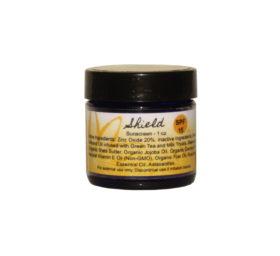
So you do have to take some time to decide what works best for you. We’ve done a significant amount of research ourselves—over the course of a couple of years—and that work led to the development of our Shield Sunscreen, which was tested at an SPF of 15. Whether or not it’s the right fit for you is something only you can decide. If you prefer a product with higher SPF or water resistance, those options are out there. But at the end of the day, it comes down to your comfort level with the ingredients you’re putting on your skin.
For those who want full transparency, here is exactly what we use in our Shield Sunscreen:
FDA-approved Active Ingredient:
Zinc Oxide 20%
Additional Ingredients:
Sweet Almond Oil infused with Green Tea and Milk Thistle, Beeswax, Organic Shea Butter, Organic Jojoba Oil, Organic Coconut Oil, Natural Vitamin E Oil (non-GMO), Organic Flax Oil, Rosemary Essential Oil, Astaxanthin
Lastly, if you want to dig deeper into the topic, there is a comprehensive review titled “Potential of herbs in skin protection from ultraviolet radiation.” that explores how various plant-based compounds may support the skin against UV-related damage. It’s a detailed read with a number of additional references for those who want to better understand the science behind it..25
For Health,
Tober
References:
- U.S. Food and Drug Administration. Sunscreen drug products for over-the-counter human use—testing procedures and labeling. Final rule. Fed Regist. 2011;76(117):35620-35665.
- Consumer Reports. Sunscreen products can vary widely in effectiveness despite labeled SPF. Published testing reports.
- Nash JF. Human safety and efficacy of UV filters and sunscreen products. Dermatol Clin. 2006;24(1):35-51.
- U.S. Food and Drug Administration. Sunscreen drug products for over-the-counter human use—testing procedures and labeling. Final rule. Fed Regist. 2011;76(117):35620-35665.
- U.S. Food and Drug Administration. Sunscreen drug products for over-the-counter human use—testing procedures and labeling. Final rule. Fed Regist. 2011;76(117):35620-35665.
- Diffey BL. Sunscreens and UVA protection: A major issue of minor importance. Photochem Photobiol Sci. 2001;1(1):1-3.
- U.S. Food and Drug Administration. Sunscreen drug products for over-the-counter human use—proposed rule. Fed Regist. 2019;84(38):6204-6275.
- U.S. Food and Drug Administration. Sunscreen drug products for over-the-counter human use—testing procedures and labeling. Final rule. Fed Regist. 2011;76(117):35620-35665.
- Diffey BL. When should sunscreen be reapplied? J Am Acad Dermatol. 2001;45(6):882-885.
- Osterwalder U, Herzog B. Sun protection factors: world wide confusion. Br J Dermatol. 2009;161(s3):13-24.
- Matta MK, Zusterzeel R, Pilli NR, et al. Effect of sunscreen application on plasma concentration of sunscreen active ingredients. JAMA. 2019;321(21):2082-2091.
- International Organization for Standardization. ISO 24444:2019. Cosmetics—Sun protection test methods—In vivo determination of the sun protection factor (SPF).
- International Organization for Standardization. ISO 24444:2019. Cosmetics—Sun protection test methods—In vivo determination of the sun protection factor (SPF).
- Wang SQ, Balagula Y, Osterwalder U. Photoprotection: a review of the current and future technologies. Dermatol Ther. 2010;23(1):31-47.
- Pérez-Sánchez A, Barrajón-Catalán E, Caturla N, Castillo J, Benavente-García O, Alcaraz M, Micol V. Protective effects of citrus and rosemary extracts on UV-induced damage in skin cell model and human volunteers. J Photochem Photobiol B. 2014;136:12-18.
- U.S. Food and Drug Administration. Sunscreen: How to help protect your skin from the sun. Updated 2023.
- Ou-Yang H, Jiang LI, Meyer K, et al. Sun protection by beach umbrella vs sunscreen with a high sun protection factor. JAMA Dermatol. 2017;153(3):304-308.
- Matta MK, Florian J, Zusterzeel R, et al. Effect of sunscreen application under maximal use conditions on plasma concentration of sunscreen active ingredients: a randomized clinical trial. JAMA. 2020;323(3):256-267.
- Matta MK, Zusterzeel R, Pilli NR, et al. Effect of sunscreen application on plasma concentration of sunscreen active ingredients. JAMA. 2019;321(21):2082-2091.
- Lee J, Lee Y, Kim J, et al. Prevention of retinal light damage by zinc oxide combined with rosemary extract. Mol Vis. 2013;19:1131-1140.
- Nichols JA, Katiyar SK. Skin photoprotection by natural polyphenols: anti-inflammatory, antioxidant and DNA repair mechanisms. Arch Dermatol Res. 2010;302(2):71-83.
- Kejlová K, Jírová D, Bendová H, Kandárová H, Weigmann HJ, Liebsch M. Phototoxicity of essential oils intended for cosmetic use. Toxicol In Vitro. 2010;24(7):2084-2089.
- Ácsová A, Kašparová M, Kučerová R, et al. The real UVB photoprotective efficacy of vegetable oils. Food Chem Toxicol. 2021;147:111881.
- Kejlová K, Jírová D, Bendová H, Kandárová H, Weigmann HJ, Liebsch M. Phototoxicity of essential oils intended for cosmetic use. Toxicol In Vitro. 2010;24(7):2084-2089.
- Nichols JA, Katiyar SK. Skin photoprotection by natural polyphenols: anti-inflammatory, antioxidant and DNA repair mechanisms. Arch Dermatol Res. 2010;302(2):71-83.
Nature's Complement is a participant in the Amazon Services LLC Associates Program, an affiliate advertising program. If you purchase products on Amazon through any of our affiliate links, we get a small percentage of the transaction, at no extra cost to you. We spend a lot of time writing the articles on this site, and all this information is provided free of charge. When you use our affiliate links, you support the writing you enjoy without necessarily buying our products. (However we would appreciate if you would do that too!) Thank you for helping to support our work, however you choose to do so.
These statements have not been evaluated by the Food and Drug Administration. This information and/or products are not intended to diagnose, treat, cure or prevent any disease.