

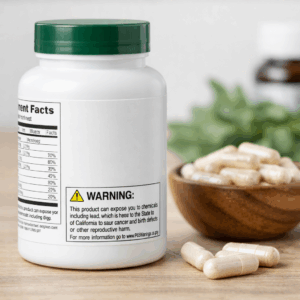
As laws change to give health conscious consumers more information about what’s in the products they buy, unintended consequences sometimes follow. California’s Prop 65 warning requirements are a good example. The law began with constructive goals, but in practice the way warnings are triggered and displayed can create confusion, especially for supplement and natural product manufacturers.2
Does the presence of a Prop 65 warning on a label mean a product is unsafe to use? And conversely, does the absence of a Prop 65 warning mean a competing product is safer?
The short answers:
No, and no.
This doesn’t mean Prop 65 warnings should be ignored, and it also doesn’t mean you should automatically avoid any product that carries one. The goal of this article is to give you enough context to interpret the warning intelligently and make the best decision for yourself and your family.
The long answers:
California voters approved Proposition 65 in 1986. It is formally titled The Safe Drinking Water and Toxic Enforcement Act of 1986. The law requires the State to publish and maintain a list of chemicals known to cause cancer, birth defects, or other reproductive harm.3 It also prohibits businesses from knowingly discharging listed chemicals into sources of drinking water.1
Nature’s Complement is built on ingredient transparency and safe formulation. We believe consumers should be able to see what’s in a product before purchasing it. With that said, Prop 65, specifically how warnings are triggered and communicated, has practical limitations that can reduce its usefulness for everyday decision making.1
Prop 65 is a good example of how a well intended consumer protection concept can become less helpful when the details are not communicated in a way that supports real world risk interpretation. While we support transparency, disclosure, and warnings about harmful exposures, Prop 65 warning thresholds can be conservative enough that products may carry warnings even when consumer risk is difficult to interpret from the label alone. More importantly, the warning often lacks sufficient detail about which chemical triggered it and what the likely route and level of exposure are, which limits a consumer’s ability to do meaningful risk assessment.1
For example, a friend of ours purchased a new clothes washer that carried a Prop 65 warning. The label itself did not identify the chemical of concern, so the only way to find out was to contact the manufacturer. In this case, the company explained that lead was present in internal motor components. In practical terms, consumer exposure from normal use would be unlikely because the lead is not part of a surface intended for routine contact, and ingestion exposure would not be expected during ordinary operation. Yet the Prop 65 warning is still required, and for many consumers it creates understandable concern that something in the machine might contaminate clothing. In this scenario, that is not how exposure would occur.
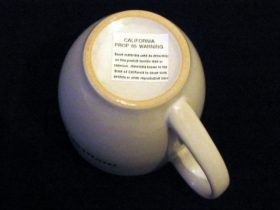
So while Prop 65 as originally conceptualized was a good idea, the way the warning is often presented in practice can reduce its practical utility. When consumers encounter the same warning across a wide range of products, without clear details about the chemical, the exposure route, or the likely level of exposure, it can lead to confusion and warning fatigue. Without information about how a listed chemical is present and the likelihood of meaningful exposure, it becomes difficult for consumers to make a realistic risk assessment.1
This doesn’t mean Californians should eliminate the law. The practical issues could be improved if warnings consistently provided enough detail to be useful. OEHHA’s plain-language explanation highlights that exposures below safe harbor levels are exempt from warning requirements, but the warning itself does not provide exposure context. More detail (including which chemical is involved and the route of exposure) would make warnings more useful for consumers who want to understand what a label is actually communicating.1

Down the Rabbit Hole We Go
Prop 65 includes a list of chemicals that has grown over time and includes both naturally occurring and synthetic substances.1,2 The official list is maintained by OEHHA and can be downloaded as a PDF or Excel file.4 With such a broad array of chemicals and potential endpoints, a generic warning without specificity often does not provide enough information for consumers to make an educated decision.
To guide warning decisions, OEHHA establishes “safe harbor” levels. These include No Significant Risk Levels (NSRLs) for chemicals listed as causing cancer and Maximum Allowable Dose Levels (MADLs) for chemicals listed as causing birth defects or other reproductive harm.5 OEHHA explains the cancer benchmark behind NSRLs as “not more than one excess case of cancer in 100,000 individuals exposed over a 70-year lifetime,” and describes reproductive thresholds using a 1/1000 safety factor based on the no observable effect level.1,6
OEHHA also provides business-facing guidance explaining that the warning regulations primarily describe how to provide a warning once a business has determined one is required, and that the warning regulations do not require a business to perform testing.7

So, what does all this have to do with supplements?
It’s easy to go down this rabbit hole and lose sight of the original question. Should you be concerned about purchasing supplements that carry a Prop 65 warning label?
One real-world issue is that many natural products, including herbs, have complex supply chains and may contain trace constituents that originate from soil or water. Industry comments submitted to OEHHA have highlighted the practical difficulty and cost of testing broadly across a long list of chemicals, which can lead some businesses to use warnings as a legal precaution rather than as a clear consumer communication tool.8
There were significant warning rule changes adopted in 2016 and implemented with an operative date in 2018. OEHHA’s Final Statement of Reasons documents the regulatory history and the intent behind “clear and reasonable warnings.”9 OEHHA’s business Q&A also explains practical compliance details, including how older compliant labels can remain valid for certain products manufactured before the operative date.7
Many dietary supplements, particularly those derived from plants, originate in soil and agricultural environments where trace elements occur naturally. Substances such as lead, arsenic, and cadmium are present in varying background levels in soil and water throughout the world. When plants grow in that environment, small amounts of those elements can be taken up and incorporated into plant material. Several of these elements appear on the Prop 65 list.
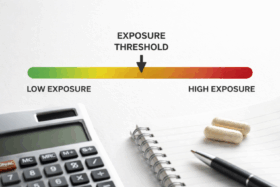
Under Prop 65, a warning is required if exposure to a listed chemical exceeds established “safe harbor” levels, including No Significant Risk Levels (NSRLs) for cancer and Maximum Allowable Dose Levels (MADLs) for reproductive toxicity. These thresholds are based on long-term exposure modeling and incorporate conservative safety factors. For complex botanical products that may contain multiple ingredients sourced from different regions, evaluating every possible listed chemical across the supply chain can become technically demanding and costly.
Industry comments submitted during regulatory review periods have noted the practical difficulty of routinely testing for large numbers of listed chemicals across diverse natural product categories, particularly for smaller companies. In some cases, the cost of comprehensive testing can exceed the cost of applying a warning label. As a result, some businesses choose to use Prop 65 warnings as a precautionary compliance strategy when exposure determinations are uncertain.
For consumers who rely on supplements for nutritional or therapeutic support, this distinction matters. A warning may reflect conservative regulatory modeling or variability in naturally occurring background levels rather than a demonstrated hazard under normal conditions of use. The most practical step, if concerned, is to contact the manufacturer and ask which chemical triggered the warning and what exposure assumptions were used in making that determination.

Bottom Line
The bottom line is that Prop 65 warnings can be difficult to interpret without more context. A Proposition 65 places warning obligations on businesses for exposures above defined thresholds, and it contains exemptions, including for exposures below safe harbor levels and for certain small businesses.1
Until these communication problems are improved, Prop 65 warnings are limited as stand alone tools for practical risk assessment. As a former toxicology researcher, I would need chemical specific information, exposure pathway, and approximate exposure level to interpret what a warning means in a meaningful way.
Bey Points
- Proposition 65 began with clear consumer-protection goals, but aspects of its implementation can make warnings difficult to interpret in real-world purchasing decisions.2
- Prop 65 warnings now appear on a wide range of products, from food and supplements to consumer goods and hardware.
- Prop 65 is a California-specific regulatory framework. Its exposure thresholds differ from federal standards established by agencies such as the FDA or EPA.1
- Listed chemicals include both synthetic substances and naturally occurring compounds such as trace metals found in soil.4
- Prop 65 warnings do not specify whether a listed chemical was intentionally added or present due to natural environmental background levels.
- Prop 65 warnings typically do not provide enough detail about exposure route or concentration to allow consumers to perform a meaningful risk assessment from the label alone.1
- Under safe harbor warning provisions, a business may be required to name only one listed chemical in the warning, even if multiple listed chemicals could apply.7
- A Prop 65 warning does not automatically mean a product is unsafe.
- The absence of a warning does not necessarily confirm the absence of listed chemicals, as enforcement relies on business knowledge and compliance.1
- Cancer risk modeling involves statistical probability and long-term exposure assumptions, which can be difficult to interpret without context.1
- The debate surrounding Prop 65 continues, and regulatory interpretation may evolve over time.
Understanding what a Prop 65 warning does and does not communicate allows consumers to make more informed decisions rather than reacting solely to the presence or absence of a label.
For Health,
Rob
References Cited:
1 OEHHA. “Proposition 65 in Plain Language.” (Aug 1, 2017). https://oehha.ca.gov/proposition-65/general-info/proposition-65-plain-language
2 OEHHA. “About Proposition 65.” https://oehha.ca.gov/proposition-65/about-proposition-65
3 OEHHA. Proposition 65 overview page. https://oehha.ca.gov/proposition-65
4 OEHHA. “The Proposition 65 List.” https://oehha.ca.gov/proposition-65/proposition-65-list
5 OEHHA. “No Significant Risk Levels (NSRLs) and Maximum Allowable Dose Levels (MADLs).” https://oehha.ca.gov/proposition-65/general-info/proposition-65-no-significant-risk-levels-nsrls-and-maximum-allowable-dose-levels-madls
6 OEHHA. “Fact Sheet on Proposition 65 Safe Use Determination (SUD).” (Sep 29, 2017). PDF: https://oehha.ca.gov/sites/default/files/media/downloads/faqs/sudfacts09292017.pdf
7 OEHHA. “Proposition 65 Clear and Reasonable Warnings: Questions and Answers for Businesses.” (Revised July 2018). PDF: https://oehha.ca.gov/sites/default/files/media/downloads/crnr/art6businessqa.pdf
8 Natural Products Association. “Open letter to OEHHA from the Natural Products Association.” (Nov 17, 2014). PDF: https://oehha.ca.gov/media/downloads/proposition-65/crnr/comments/nov14natprodassoc.pdf
9 OEHHA. “Final Statement of Reasons: Proposed Repeal of Article 6 and Adoption of New Article 6 Regulations.” (Sep 1, 2016). PDF: https://oehha.ca.gov/sites/default/files/media/downloads/crnr/art6fsor090116.pdf
Nature's Complement is a participant in the Amazon Services LLC Associates Program, an affiliate advertising program. If you purchase products on Amazon through any of our affiliate links, we get a small percentage of the transaction, at no extra cost to you. We spend a lot of time writing the articles on this site, and all this information is provided free of charge. When you use our affiliate links, you support the writing you enjoy without necessarily buying our products. (However we would appreciate if you would do that too!) Thank you for helping to support our work, however you choose to do so.
These statements have not been evaluated by the Food and Drug Administration. This information and/or products are not intended to diagnose, treat, cure or prevent any disease.