

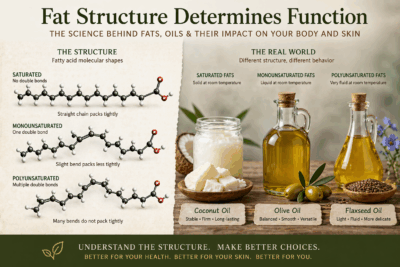
Why would you want to learn more about some of the ingredients that go into all natural personal care products? Why would you want to have more of a background about fatty acids and lipids in nutrition and everyday life?
Simple. Understanding the basics of the different types of fatty acids (oils and fats) will allow you to make healthier choices in both your skin care and your nutritional needs.
Last Updated: Apr 2026
The goal here is to provide the basics, not to be a comprehensive guide to fatty acids. Warning: there is a little bit of chemistry in this, but nothing too painful. If you enjoy chemistry, this will be no problem. If you hate chemistry, you may want to scroll past the images and get to the bottom-line points. But the chemistry is important in understanding why fatty acids have different properties, and what those differences actually mean to you.
As reference sources, much of the information in this article consists of my summaries of relevant sections from several college textbooks listed at the end of this article. Most original image credits have been replaced with custom educational graphics created for this article. Any externally sourced images are credited where used.
Key Point: Understanding how fats are structured helps you make better decisions about both what you put on your skin and what you put in your body.
Introduction
The term “lipid” is a slightly technical chemistry and biology term that refers to a broad group of substances that include oils and fats, as well as other compounds such as waxes, sterols (e.g. cholesterol), steroids, phospholipids, and fat-soluble vitamins.1–3 This family of compounds, commonly referred to simply as “lipids,” shares the characteristic that they are hydrophobic (not soluble in water), and they are primarily comprised of carbon and hydrogen.
The main difference between an “oil” and a “fat” is simply that the former is a liquid at room temperature, while the latter is a solid at room temperature. Most “butters” would also be considered “fats,” since they are more or less solid at room temperature, even though they may soften in warmer environments. To be technically accurate, the scientific definition of “room temperature” is about 22 degrees C, or about 72 degrees F.
Key Point: Lipids include oils, fats, and several related compounds. The simplest distinction between oils and fats is whether they are liquid or solid at room temperature.
Structure and Characteristics of Fatty Acids (FAs)
Fatty acids, often abbreviated as “FAs,” are found in many foods such as nuts and seeds, vegetable oils, and some grains.1,2 As the name implies, fatty acids structurally appear acidic due to the carboxylic acid end (a brief explanation of this will follow). However, because pH is a measure of acidity or alkalinity in an aqueous (water-based) solution, there is technically no pH value for pure fatty acids. The pH of these can only be measured once they have been mixed with some amount of water, for example in a personal care product or a food item.
Key Point: Pure fatty acids do not have a pH—pH only applies once they are part of a water-based system.
Basic Structure
Fatty acids (FAs) have a hydrocarbon structure—primarily a chain of linked carbon atoms forming a backbone (the “C”s are the carbons in the diagrams), with hydrogen atoms attached to those carbons (the “H”s are the hydrogens in the diagrams). They can be diagrammed something like this:
Figure 1. An example of a fatty acid—specifically a saturated fatty acid. More specifically, lauric acid. Note that the carboxyl group is what makes it potentially acidic.
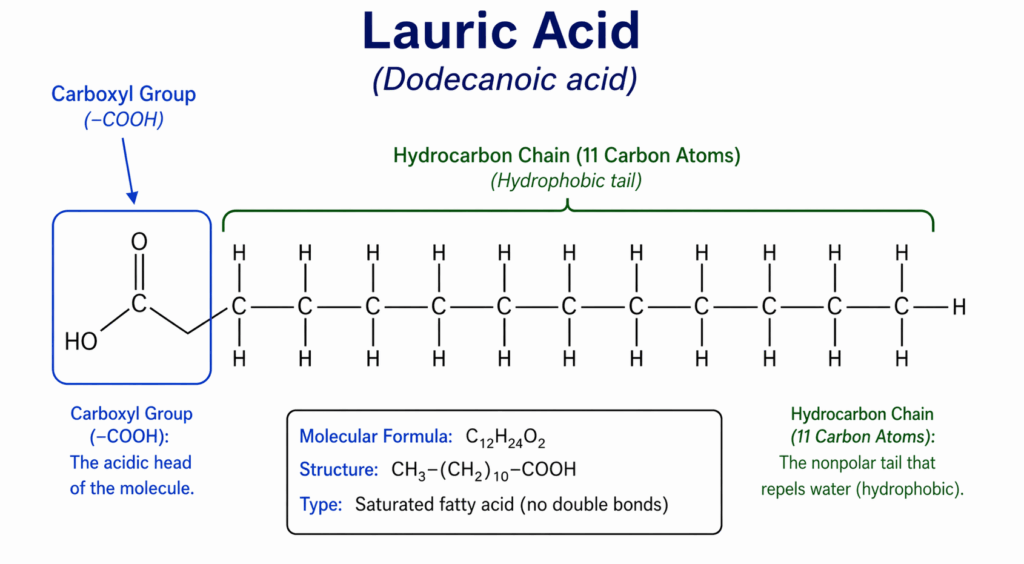
The most common sources of hydrocarbons are oils and fats from various plants and animals, as well as petroleum. For the purpose of this article, I will mostly focus on oils and fats from plants, not from petroleum or animals. However, it is worth pointing out that many of the principles that apply to plant fatty acids also apply to animal fatty acids, and also, but to a lesser degree, to petroleum products.
It is also worth pointing out that these similarities in certain aspects (but with important differences) allow manufacturers of personal care products to get away with using petroleum-based ingredients in their products, even though that might not be the healthiest choice for your skin. We explore some of this in our articles on chemical preservatives (Part I and Part II). Further elaboration on how petroleum ingredients are often used in skin care products, and why they are not the best choice, will be the topic of a future article.
Key Point: Fatty acids share structural similarities across plant, animal, and petroleum sources—but similar structure does not mean similar biological value.
Carbon Chains and Double Bonds
Two of the most important characteristics that identify fatty acids (FAs) and give them their functional properties are the length of their carbon chains and the number and position of carbon–carbon double bonds. Essentially, the length of the carbon chain, combined with the number and position of carbon double bonds, defines fatty acids and determines their properties.
For those not familiar, each element on the periodic table “prefers” to have a certain number of chemical bonds. Carbon happens to “prefer” having four bonds. So any time there are carbon atoms in a hydrocarbon chain that are missing hydrogen (or other bonded molecules), they will form an additional bond with a neighboring carbon. This results in what is called a double bond.
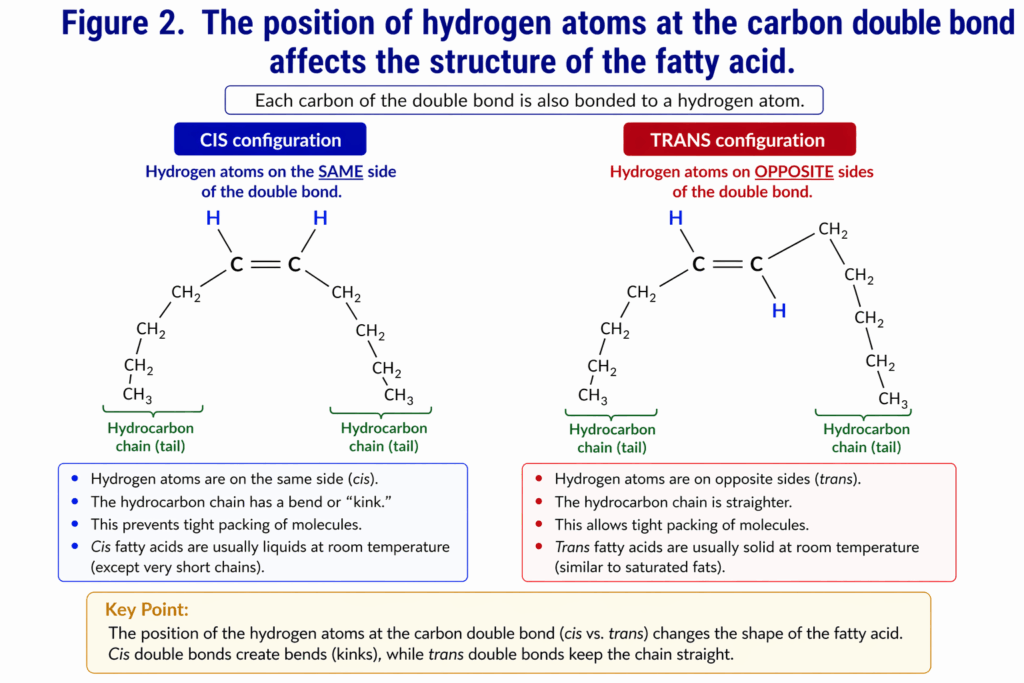
Fatty acids with double bonds can be diagrammed something like this (where the “C=C” indicates the double bond):
Figure 2. Two fatty acids—one shown with a “trans” configuration, and one with a “cis” configuration.
Key Point: The length of the carbon chain and the number and position of double bonds are the primary factors that determine how a fatty acid behaves.
Key Point: Carbon forms four bonds. When those bonds are not fully occupied by hydrogen or other atoms, carbon forms double bonds with neighboring carbons.
Saturated vs Unsaturated Fatty Acids
Fatty acids that have no carbon double bonds are “saturated” with hydrogen, which is where the term “saturated fats” comes from. Since carbons that are saturated with hydrogen already have four bonds, they do not need to form double bonds with their neighbors. Figure 1 above shows an example of a saturated fatty acid.
Fatty acids with carbon double bonds are “unsaturated” because they are not fully saturated with hydrogen. However, as will be covered shortly, there are several types of unsaturated fatty acids. Figure 2 shows examples of unsaturated fatty acids with carbon double bonds.
Fatty acids can have different numbers of carbon double bonds. Fatty acids that have multiple carbon double bonds are known as “polyunsaturated” fatty acids (“poly” meaning many). Fatty acids with one carbon double bond are known as “monounsaturated” fatty acids (“mono” meaning one). And as mentioned, fatty acids with no carbon double bonds are known as “saturated” fatty acids. There are more than one type of fatty acid in each of these categories, which will be explained below.
Key Point: Saturated fats have no double bonds, monounsaturated fats have one, and polyunsaturated fats have multiple.
Key Point: The presence and number of double bonds is what distinguishes different types of fatty acids and begins to explain their different properties.
Chain Length and Energy
Regarding the length of a carbon chain, from a nutritional (or energy) standpoint, longer carbon chains contain more energy, while shorter carbon chains contain less. Double bonds in a hydrocarbon chain also reduce the amount of energy it contains. So, assuming equal chain length, fully saturated fats contain more energy, or calories (kcals), than unsaturated fats.
The length of a hydrocarbon chain will also affect other properties, such as viscosity (how “thick” the fatty acid is when liquid) and solubility (how well it dissolves, and what will dissolve into it). All things being equal, longer fatty acids will gel (solidify) at higher temperatures, while shorter fatty acids will gel at lower temperatures. So, chain length can affect the physical properties and behavior of fatty acids.
An example of a long fatty acid is oleic acid (18 carbons long), found in olive oil, which is why olive oil tends to gel in the refrigerator. An example of a short fatty acid is caprylic acid, found in milk fat and coconut oil, which helps explain why these fats tend to soften at room temperature compared to animal lard, despite the fact that both types of fats are saturated.
Key Point: Longer carbon chains generally contain more energy and tend to solidify at higher temperatures, while shorter chains contain less energy and remain more fluid.
Key Point: Double bonds reduce energy content and influence physical behavior, but chain length is still a major factor in how a fat behaves.
Shape and Biological Behavior
Carbon double bonds also play important roles in the properties and characteristics of fatty acids. One important effect that carbon double bonds have is that they change the shape of the fatty acid by introducing bends in the carbon chain.
Therefore, the location and number of carbon double bonds change the shape of each fatty acid, making each one unique and giving it unique properties as a result. In chemistry and biology, shape (or “conformation”) is extremely important in determining how molecules behave, so these subtle changes in structure can have a large impact on how fatty acids behave in chemical and biological systems.
Or, to put it more simply, these subtle changes in shape can have a significant impact on how fatty acids interact with your skin, or within your body.
Key Point: Double bonds change the shape of fatty acids, and even small changes in shape can lead to major differences in how they behave.
Key Point: In biology, structure determines function—this is why small molecular differences can have large real-world effects.
Cis vs Trans Configuration
For example, Figure 2 shows the difference between a fatty acid with a carbon double bond in a naturally occurring “cis” form (hydrogens on the same side), versus a fatty acid with a carbon double bond in an artificially created “trans” form (hydrogens on opposite sides).
Note that while both have bends due to the presence of the double bond, the overall shape is quite different. The “trans” fatty acid is much straighter, while the “cis” fatty acid is more curved.
As a reminder, Figure 2 is again shown below:
Key Point: Cis fats are naturally occurring and typically functional in biology, while trans fats are structurally altered and associated with negative health effects.
Key Point: Even when two fatty acids look similar, small differences in structure can result in very different biological outcomes.
Shape and Health Implications
In human nutrition, this difference in shape can make the difference between a fatty acid that is an essential nutrient (the cis fatty acid) and one that is associated with various pathologies (the trans fatty acid, as in the infamous “trans fats”).
It is also worth pointing out that saturated fats, such as those pictured in Figure 1, are also relatively straight, but do not necessarily pose the same health risks that trans fats do. This highlights an important point: even when fatty acids appear structurally similar, their biological effects can be very different.
Subtle differences in shape can have large impacts on function.
Key Point: Small structural differences—such as cis versus trans configuration—can lead to major differences in how fatty acids behave in the body.
Key Point: Similar appearance does not guarantee similar biological effects; structure drives function.
Shape and Melting Behavior
The relative degree of how straight or curved a fatty acid is also affects its melting point. In other words, this determines whether a particular fatty acid is a solid or a liquid at room temperature, the temperature at which it will melt, and whether it becomes solid in the refrigerator or freezer.
For example, coconut “oil” is usually a solid butter at standard “room temperature” of 72 degrees F (unless it has been fractionated), whereas olive oil is a liquid at standard room temperature. However, if you put olive oil in the refrigerator, it will gel or almost solidify. On the other hand, flax oil will remain liquid both at room temperature and in the refrigerator.
These differences are largely determined by the number of carbon double bonds contained in the predominant fatty acids within each oil. In fact, it is possible, to a certain extent, to predict the melting point and other physical properties of an oil based on the structure of the fatty acids it contains.
(This same principle also applies to oils used for lubrication purposes, including petroleum-based oils.)
Key Point: The shape of a fatty acid—driven by its double bonds—directly influences whether it behaves as a solid or a liquid at a given temperature.
Key Point: Oils with more double bonds tend to remain liquid at lower temperatures, while more saturated (straighter) fats solidify more easily.
Molecular Packing and Physical State
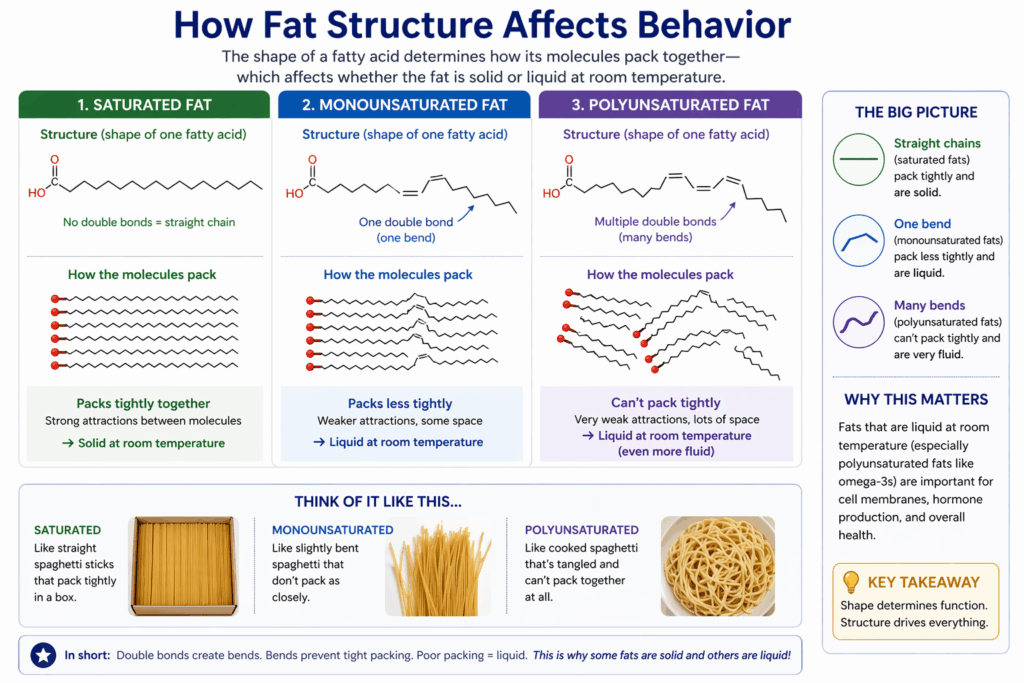
The more saturated a fatty acid is, the straighter it will be. A straighter shape allows individual fatty acids (or mono-, di-, or triglycerides) to pack together more closely, which is what makes a fatty acid more likely to be solid rather than liquid.
In contrast, the more carbon double bonds a fatty acid has (the less saturated it is), the more bends it will contain. These bends force the molecules to be spaced further apart, preventing tight packing.
In general, more carbon double bonds lead to less densely packed fatty acids, and therefore a greater likelihood that the substance will remain liquid at a given temperature.
Key Point: Straighter fatty acids pack tightly and tend to be solid, while bent fatty acids pack loosely and tend to remain liquid.
Key Point: Double bonds introduce bends that prevent tight packing, which directly influences whether a fat is solid or liquid.
Relative Impact of Double Bonds vs Chain Length
Since both carbon double bonds and carbon chain length affect the melting point of a fatty acid, which has more impact? Based on many real-world examples, carbon double bonds appear to have a greater influence on melting point than carbon chain length.
This helps explain why mostly monounsaturated olive oil is liquid at room temperature (despite containing relatively long carbon chains), while mostly saturated coconut oil remains a solid (despite containing shorter carbon chains).
Key Point: Both chain length and double bonds affect melting behavior, but double bonds often have a stronger influence.
Key Point: This is why long-chain oils like olive oil can remain liquid, while shorter-chain fats like coconut oil can remain solid.
Visual Summary: How fat structure affects behavior.
Stability, Oxidation, and Rancidity
Carbon double bonds also make fatty acids more susceptible to oxidation, or rancidity. In general, the more carbon double bonds a fatty acid has, the less chemically stable it is, and the more likely it is to go rancid through oxidation. Conversely, greater saturation makes a fatty acid more stable and less prone to oxidation and rancidity.
This is why, prior to the invention of “hydrogenated” or “trans” fats, saturated fats were commonly used in processed food products that needed to have long shelf lives. In fact, this was a large part of the reason for the development of hydrogenated trans fats—they are also very stable and resistant to rancidity.
However, just because something lasts longer does not mean it is beneficial or healthy.
If you would like more explanation of rancidity, Wikipedia provides a brief overview here.
While increased saturation makes fatty acids more stable and resistant to oxidation, it does not necessarily correlate with other properties such as smoke point or burning temperature, which are influenced by additional factors beyond saturation and double bonds.
Key Point: More double bonds = less stability and greater susceptibility to oxidation (rancidity).
Key Point: Greater saturation increases stability, but stability does not automatically mean a fat is healthier.
Triglycerides and Storage Forms
To briefly clarify, a monoglyceride, diglyceride, or triglyceride refers to one, two, or three fatty acids being bound to a glycerol molecule, which is a common method for organisms to store fatty acids. (Think of the glycerol that is used in many soaps—that occurs naturally in most plants and animals.)
Oils and fats can contain a mixture of individual fatty acids, known as free fatty acids, as well as monoglycerides, diglycerides, and triglycerides. These differences primarily reflect how the plant or animal stored the fatty acids at a given time, and do not have as much of an effect on fatty acid properties as the structural features discussed earlier.
The health implications of fatty acids are mostly determined by their double bonds and carbon chain length, not by whether they are in the form of mono-, di-, or triglycerides, or free fatty acids.
Below is a diagram of three saturated fatty acids bound to a glycerol molecule to form a triglyceride. (This diagram uses a slightly different “shorthand” format.)
Figure 3. A triglyceride with the glycerol and fatty acid portions color coded.
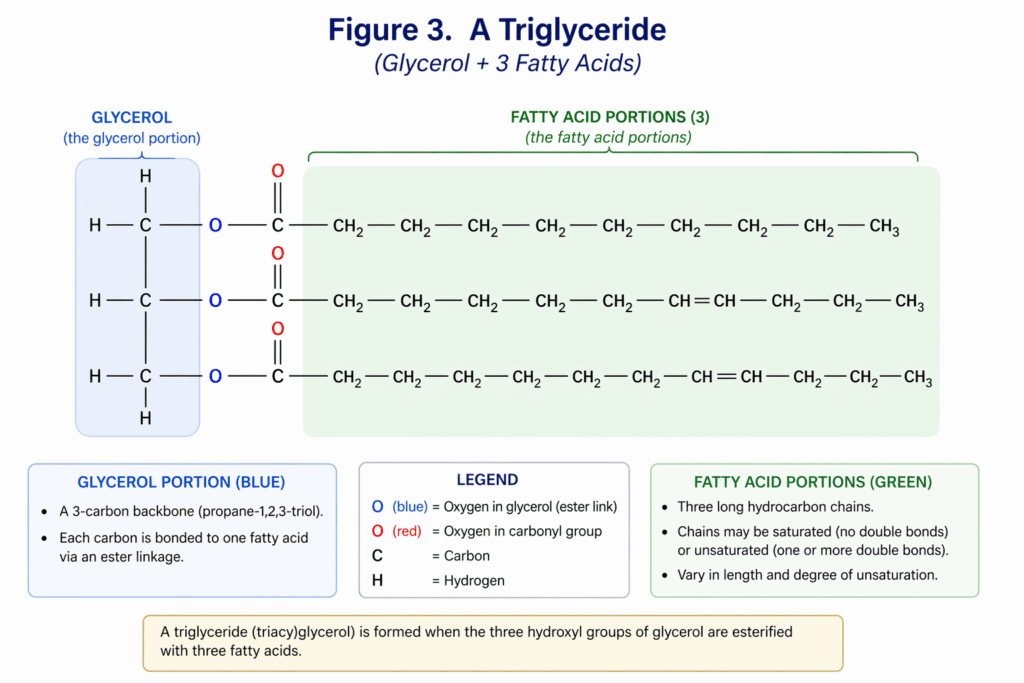
Key Point: Monoglycerides, diglycerides, and triglycerides describe how fatty acids are stored—not what type of fatty acids they are.
Key Point: The health and functional properties of fats are driven primarily by structure (chain length and double bonds), not by whether they are stored as mono-, di-, or triglycerides.
Fatty Acid Naming Conventions
Similarly, some clarification is needed for naming conventions of fatty acids. Fatty acids generally have two ends—one end is called the “carboxy end” and the other is called the “methyl end.” The naming depends on counting the number of carbons to the first double bond from the appropriate end.
(If you are not a chemist, it is not important for the rest of this article that you understand exactly what “carboxy” or “methyl” mean. And if you are a chemist, you already know what they mean.)
If counting from the carboxy end, the “delta” naming convention is used. If counting from the methyl end, the “omega” naming convention is used. The omega naming convention has become much more common in everyday use, with references to “omega 3” (linolenic acid), “omega 6” (linoleic acid), and “omega 9” (oleic acid) being widely recognized.
In other words, an omega-3 fatty acid has its first carbon double bond starting at the third carbon, an omega-6 fatty acid has its first carbon double bond starting at the sixth carbon, and so on.
Another naming convention you might see is something like “18:3.” This takes the form of C:D, where C is the number of carbon atoms in the fatty acid and D is the number of double bonds in the fatty acid.
There are several other naming conventions you may encounter. Wikipedia provides a useful summary of these systems if you would like to explore them further.
Key Point: “Omega” naming counts from the methyl end, while “delta” naming counts from the carboxy end.
Key Point: Terms like omega-3, omega-6, and omega-9 simply describe the position of the first double bond in the fatty acid.
Structural Examples and Real-World Behavior
Below are examples demonstrating how the number of carbon double bonds affects the shape of fatty acids, and how that shape, in turn, affects their ability to pack together.
The less able fatty acids are to pack together, the more likely they are to remain liquid as the temperature drops. Conversely, straighter fatty acids can pack together more densely, and therefore will solidify at warmer temperatures.
Key Point: More double bonds lead to more curvature, which prevents tight packing and keeps fats liquid at lower temperatures.
Key Point: Straighter fatty acids pack more tightly, which allows them to solidify at higher temperatures.
Polyunsaturated Fatty Acids (Examples)
Linolenic acid is an example of a polyunsaturated fatty acid. It is an omega-3 fatty acid with three carbon double bonds (highly curved), with the first double bond occurring at the third carbon atom.
This fatty acid is found in flax oil and fish oil, which helps explain why flax oil remains liquid in the refrigerator.
Figure 4. Linolenic acid.
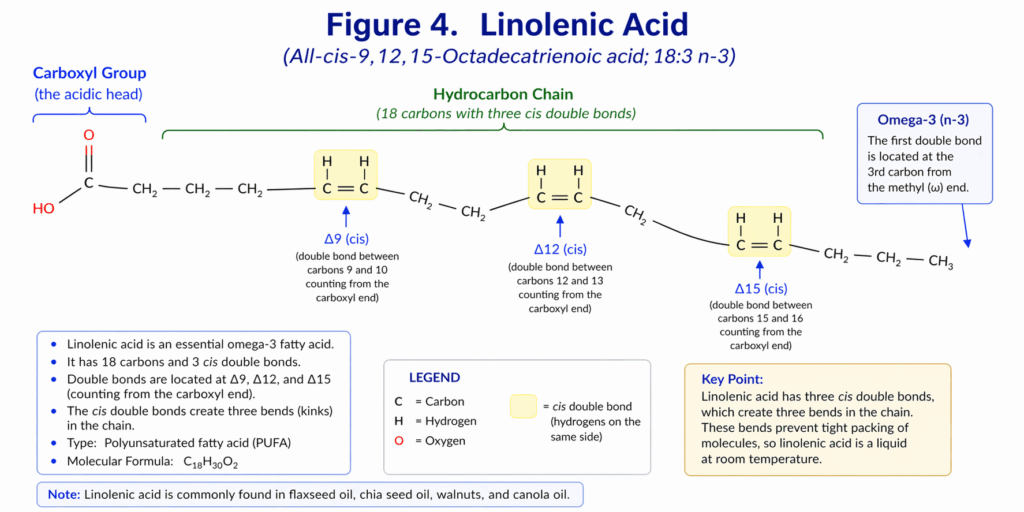
Key Point: Polyunsaturated fatty acids contain multiple double bonds, creating significant curvature that prevents tight packing.
Key Point: This increased curvature is why oils rich in polyunsaturated fats tend to remain liquid, even at lower temperatures.
Linoleic Acid (Omega-6 Example)
Linoleic acid is another example of a polyunsaturated fatty acid. In this case, it is an omega-6 fatty acid with two carbon double bonds (a moderate bend), with the first double bond occurring at the sixth carbon atom.
Note that while this structure may appear similar to the trans fat shown in Figure 2, the double bonds in this fatty acid are in a “cis” configuration rather than a “trans” configuration. (It is also worth noting that this model slightly understates the amount of bend present.)
Many common vegetable oils contain this fatty acid, which helps explain why they may become cloudy in the refrigerator but generally remain liquid.
Figure 5. Linoleic acid.
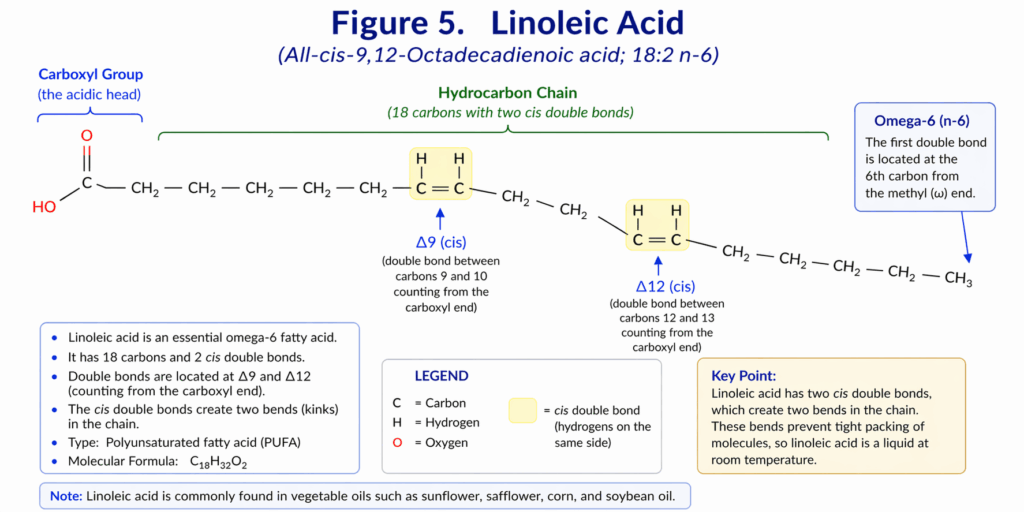
Key Point: Linoleic acid is a polyunsaturated omega-6 fatty acid with cis double bonds, which gives it a bent structure.
Key Point: Even with multiple double bonds, cis configuration maintains curvature, preventing tight packing and keeping these oils mostly liquid.
Monounsaturated Fatty Acids
Monounsaturated fatty acids have one carbon double bond each, often occurring at either the 9th (omega-9) or 7th (omega-7) carbon atom.
Even though these fatty acids contain only one double bond, they still have a significantly bent shape. This bend is why these relatively long fatty acids are liquid at room temperature, while their longer chain length causes them to gel at cooler temperatures.
Examples of monounsaturated fatty acids include omega-9 oleic acid, found in olive, almond, and avocado oils, and omega-7 palmitoleic acid, found in palm and avocado oils.
Below is an example of a monounsaturated (oleic) fatty acid:
Figure 6. Oleic acid.
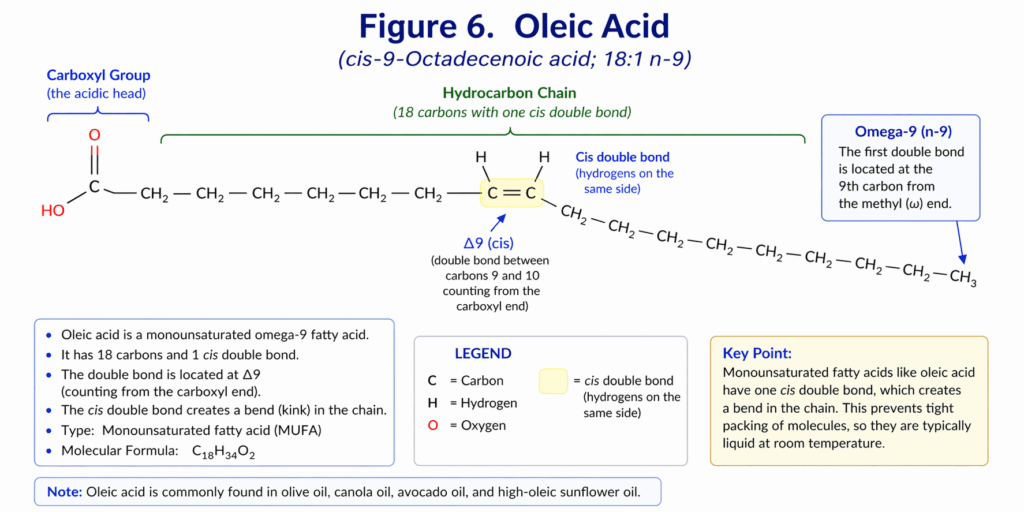
Key Point: Even a single double bond introduces enough curvature to significantly affect how a fatty acid behaves.
Key Point: Monounsaturated fats often strike a balance—liquid at room temperature, but capable of gelling at cooler temperatures due to their chain length.
Saturated Fatty Acids
Finally, the example above is a saturated fatty acid, which has a completely straight structure. Saturated fatty acids are commonly found in animal fats, as well as in coconut, palm, and dairy products.
This straight shape allows these fatty acids to pack tightly together, which is why they tend to remain solid at room temperature.
From a formulation standpoint, this is important. If you want to create a solid type of personal care product, such as a “butter,” either some form of saturated fat will be necessary (e.g. coconut oil), or a structural component such as a wax will need to be added (e.g. beeswax).
This particular example is palmitic acid.
Figure 7. Palmitic acid, a saturated fatty acid.
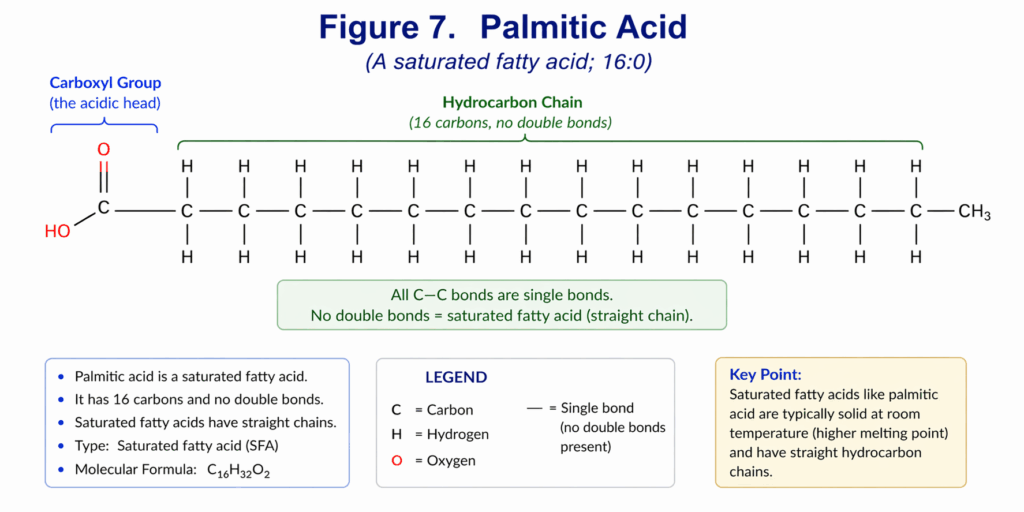
Key Point: Saturated fatty acids are straight and pack tightly, which is why they are typically solid at room temperature.
Key Point: This structural property is what makes saturated fats useful for creating solid products like butters and balms.
Where Different Types of Fatty Acids Are Found
So, where can these different types of fatty acids be found? In other words, which plants and animals produce which oils and fats?
As a disclaimer, each plant (or animal) source contains several types of fatty acids. However, it is still possible to make generalizations based on the type of fatty acid predominantly found in a given source.
As mentioned, omega-3 polyunsaturated fatty acids are found in fish oil, flax oil, and to a lesser extent walnuts and walnut oil, which also contain omega-6 fatty acids. Omega-6 polyunsaturated fatty acids are found in many “grocery store” vegetable oils, such as corn oil, soybean oil, safflower oil, sunflower seeds and their oil, and to a lesser extent canola (rapeseed) oil, which also contains monounsaturated fatty acids.
Monounsaturated fatty acids are found in olive oil, avocados and their oil, and almonds and almond oil. Finally, saturated fatty acids are found in coconut, palm, milk fat, and animal fat.
These are just the most common sources of fatty acids and are not an all-inclusive list. If you are interested in more specific compositions of fatty acids from different sources, there are many resources available that go into much greater detail.
Key Point: Most natural fat sources contain a mixture of fatty acids, but they are typically categorized by their predominant type.
Dietary Influence on Animal Fatty Acids
The types of fats that animals produce tend to be influenced by genetics, but are also affected by the types of plants the animal eats (in herbivores), or by what the animal’s prey eats (in carnivores). In other words, dietary sources of fatty acids do influence the fatty acid composition of animal tissues.
A well-supported example of this can be seen in cattle and what they are fed. Cattle fed exclusively grass tend to contain more omega-3 fatty acids, while cattle fed corn and other grains tend to contain more omega-6 fatty acids, which can be problematic. (More on this topic in the next section.)
Key Point: The fatty acid composition of animals is influenced not only by genetics, but also by diet.
Environmental Adaptation in Plant Oils
A useful rule of thumb regarding plant fatty acids is that plants have adapted the biochemistry of the lipids they produce based on the temperature of the environment in which they grow.
Plants need their fatty acids to remain somewhat malleable, which often requires at least some degree of bending from double bonds. However, they must balance this with the greater energy efficiency of storing saturated fatty acids.
Plants that grow in hot climates, such as coconut and palm, tend to produce more saturated fats because these are more energy-efficient for storage, while still remaining sufficiently malleable at higher temperatures.
Plants that grow in moderate or Mediterranean climates, such as almonds, olives, and avocados, tend to produce monounsaturated fats. These provide a balance, being more tolerant of cooler temperatures than saturated fats, while still being more energy-efficient than polyunsaturated fats.
Finally, plants that grow in colder climates tend to produce more polyunsaturated fatty acids. These are more likely to remain flexible in cold temperatures, despite being less efficient for energy storage.
Key Point: Temperature influences the types of fats plants produce—warmer climates favor saturated fats, while colder climates favor more unsaturated fats.
Table 1. Generalized Properties of Plant Fatty Acids
| Property | Saturated | Monounsaturated | Polyunsaturated |
|---|---|---|---|
| Typical Climate | Tropical | Mediterranean | Colder climates |
| Double Bonds | None | One | Multiple |
| Shape | Straight | Bent | Very bent / curved |
| Melting Temperature | Higher | Moderate | Lower |
| Energy Storage Efficiency | Highest | Moderate | Lowest |
Temperature and Animal Physiology
Interestingly, while warm-blooded animals are not subject to the same temperature-driven limitations in the types of fatty acids they produce that plants are, fish (which are cold-blooded) appear to follow a similar pattern.
This helps explain why cold-water fish species tend to have higher concentrations of omega-3 polyunsaturated fatty acids compared to warm-water fish species.
In this sense, the relationship between temperature and fatty acid composition appears to be a recurring strategy in biology, particularly in organisms that do not regulate their internal temperature as tightly.
Key Point: The relationship between temperature and fatty acid composition extends beyond plants and can also be observed in cold-blooded animals like fish.
How to Choose the Right Type of Oil
Understanding fatty acid structure is useful, but how does this translate into real-world decisions? When choosing an oil – whether for food or skin care – you are selecting a mixture of fatty acids with different levels of stability, biological activity, and physical behavior.
1. Start with Structure (What Type of Fat Is It?)
Each type of fatty acid has predictable strengths and weaknesses:
- Saturated fats: most stable, resistant to oxidation, typically solid
- Monounsaturated fats: balanced stability and fluidity
- Polyunsaturated fats: highly active biologically, but more prone to oxidation
Key Point: More double bonds increase biological activity – but also increase instability.
2. Match the Oil to Its Use
Different applications call for different properties:
- High heat or long shelf life: favor saturated or monounsaturated fats
- Nutritional support (especially omega-3): include polyunsaturated fats
- Skin care: use a balance – stable oils for structure, unsaturated oils for function
Key Point: There is no universally “best” oil. Only oils that are more appropriate for specific uses.
3. Consider How the Oil Was Processed
Processing can significantly affect quality:
- Cold-pressed / unrefined: retains more natural compounds, but is often less stable
- Refined: more stable and neutral, but may lose beneficial components
Highly processed oils are often optimized for shelf life and cost—not necessarily for health or skin compatibility.
Key Point: Processing can change how an oil behaves just as much as its fatty acid composition.
4. Watch for Oxidation Risk
Oils high in polyunsaturated fats are more sensitive to light, heat, and air:
- Store in cool, dark conditions
- Avoid prolonged heat exposure
- Be cautious using highly unsaturated oils in formulations without stabilization
Key Point: The most biologically active oils are often the least chemically stable.
Putting It All Together
In practice, the best approach is rarely to rely on a single type of oil. Combining different types allows you to take advantage of their strengths while minimizing their weaknesses.
If you only remember one thing: Saturated fats provide stability, polyunsaturated fats provide biological activity, and monounsaturated fats provide a balance of both.

Health Impacts of Different Types of Fatty Acids
Finally, now that we have discussed the sources of different fatty acids, as well as their structures and how those structures affect their chemical and physical properties, we can begin to touch on some of the health effects of different types of fatty acids.
The topic of fatty acids in human nutrition is actually a very large one that requires and deserves its own article (or several). That is not the purpose of this article, so only a few key points will be discussed here. Again, these are generalizations, but they hold true in most cases.
Key Point: The goal here is not to cover all of nutrition, but to connect fatty acid structure to real-world health effects.
General Roles of Lipids in the Body
From a dietary and health perspective, lipids play numerous roles in the body, including serving as hormones, immune signaling molecules, sources of energy and energy storage, insulation, and structural components.1–3
Lipids comprise a large percentage of cell membranes, including those in skin cells, where they contribute to structure, hydration, and protection against environmental stressors.4
Key Point: Lipids are not just energy—they are fundamental to cellular structure and biological signaling.
Essential vs Non-Essential Fatty Acids
Omega-3 polyunsaturated fatty acids and omega-6 polyunsaturated fatty acids are both considered “essential” nutrients in the human diet. Human enzymes can synthesize many types of fatty acids, but the first position at which human enzymes can introduce a double bond is at the 7th carbon from the omega end.2
Therefore, any biologically necessary fatty acids that contain double bonds before the 7th carbon position must be obtained from dietary sources. This is why it is important to consume adequate amounts of omega-3 and omega-6 fatty acids—your body cannot produce them on its own.
Strictly speaking, monounsaturated fatty acids and saturated fatty acids are not considered “essential,” because the human body can synthesize many (though not all) of them. However, that does not mean they are unimportant.
Consuming certain monounsaturated fats (such as oleic acid) and certain saturated fats (such as butyric acid) can have beneficial effects, even though they are not technically classified as essential nutrients.
In a nutritional context, “essential” simply means that deficiency will lead to disease or death. However, preventing deficiency is not the same as achieving optimal health.
Key Point: “Essential” means required to prevent deficiency—not necessarily optimal for overall health.
Key Point: Even non-essential fats can play important roles in supporting health and biological function.
Omega-3 Polyunsaturated Fatty Acids (Linolenic)
There is a great deal of medical research literature supporting that omega-3 (linolenic) polyunsaturated fatty acids have numerous health benefits. In particular, they tend to be anti-inflammatory, improve cell membrane fluidity and permeability, and support brain structure and function.5
The anti-inflammatory properties of these fatty acids are particularly important because chronic or inappropriate inflammation plays a role in numerous pathologies, as well as in some of the mechanisms of aging itself. While acute or short-term inflammation plays critical roles in fighting infections and responding to injury, it should ideally be temporary, resolve appropriately, and not persist.
It is when inflammation lingers or becomes chronic that problems occur. It is this inflammatory biochemical pathway that omega-3 fatty acids tend to help regulate and suppress.5
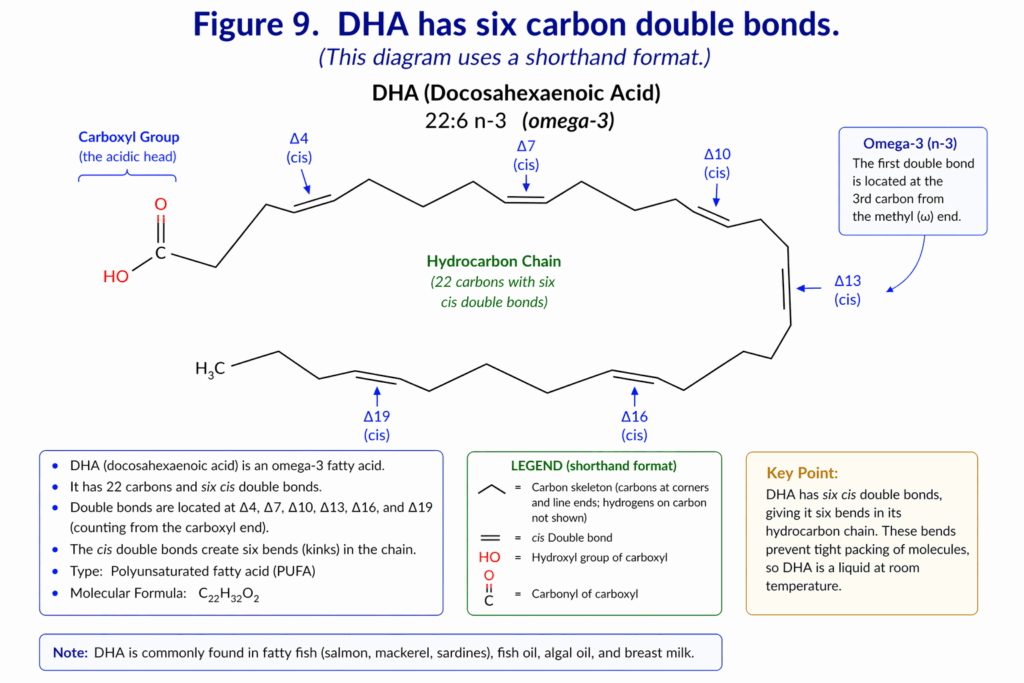
These traits are true to some extent of alpha-linolenic acid (ALA) in general, but are especially pronounced in the fatty acids eicosapentaenoic acid (EPA) and docosahexaenoic acid (DHA). As the models below show, these fatty acids contain multiple carbon double bonds and are highly curved.
Figure 8. EPA has five carbon double bonds. (This diagram uses a shorthand format.)
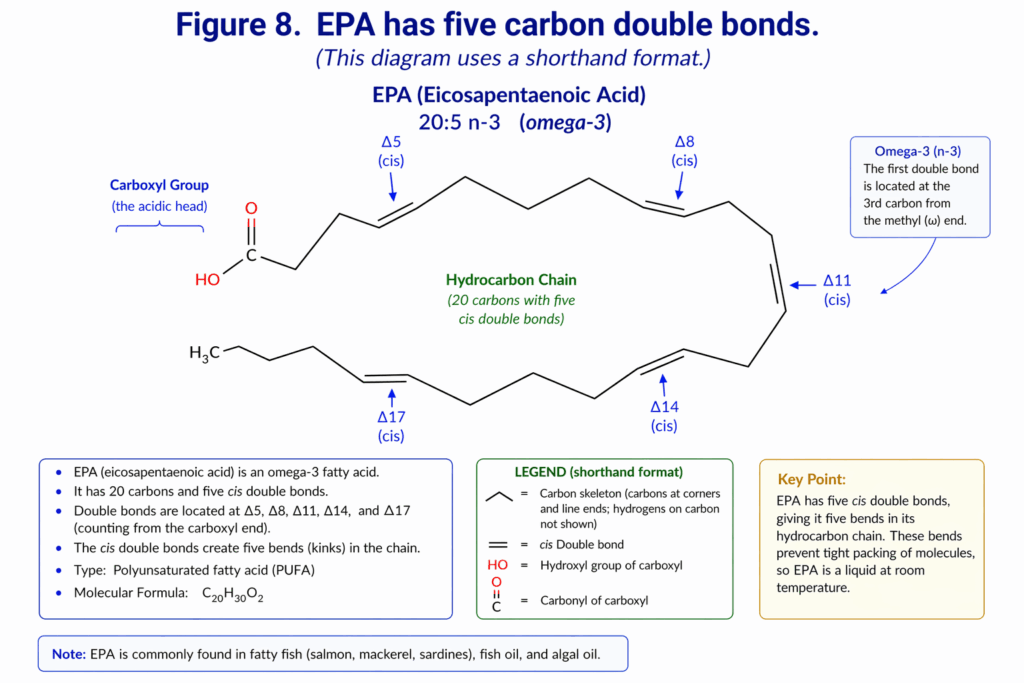
Figure 9. DHA has six carbon double bonds. (This diagram uses a shorthand format.)
Bringing this back to the topic of skin care, the anti-inflammatory effects of omega-3 fats may also be beneficial for the skin.6 However, fish oil and flax oil do not tend to work well as ingredients in topical products. Most people do not prefer applying products that have a strong odor, and as noted earlier, these types of fats are also highly prone to oxidation and spoilage.
Key Point: Omega-3 fatty acids are strongly associated with anti-inflammatory effects and play important roles in brain and cellular function.
Key Point: Their highly unsaturated structure makes them biologically active—but also chemically unstable.
Omega-6 Polyunsaturated Fatty Acids (Linoleic)
While omega-6 (linoleic) polyunsaturated fatty acids are essential for human nutrition, excessive consumption may contribute to negative health outcomes. This is because omega-6 fatty acids can promote pro-inflammatory signaling pathways, particularly when consumed in imbalance with omega-3 fatty acids.7,8
The medical literature has linked chronic inflammation to a wide range of pathologies, including cardiovascular disease, autoimmune disorders, cancer, immune senescence, asthma, arthritis, Crohn’s disease, type 2 diabetes, and neurodegenerative diseases such as Parkinson’s and Alzheimer’s.8
Over the past several decades, the consumption of omega-6 fatty acids has increased significantly in the United States and in many parts of the world, particularly as they have replaced other dietary fats such as omega-3 fatty acids and, in some cases, saturated fats.7
I will leave it to readers to consider whether this represents a causal relationship, or whether it is correlation or coincidence. However, the shift in fatty acid balance is well documented.
To conclude on omega-6 fatty acids, it is important to note that not all omega-6 fats behave identically. Certain omega-6 fatty acids, such as conjugated linoleic acid (CLA) and gamma-linolenic acid (GLA), have been associated with beneficial effects in specific contexts.9 Therefore, it is not accurate to make broad generalizations about entire classes of fatty acids.
Key Point: Omega-6 fatty acids are essential, but excessive intake—especially relative to omega-3s—may promote chronic inflammation.
Key Point: Not all omega-6 fatty acids are the same—some may have beneficial effects depending on context.
Implications for Skin Care Formulation
With that said, from a skin care perspective, it is important to recognize that the skin is also susceptible to damage from chronic inflammation. Therefore, when formulating products, it is important to choose ingredients that are less likely to contribute to inflammatory responses.
I bring this up because I have observed some manufacturers using lower-quality omega-6-rich oils (such as soybean oil) as carriers or base ingredients in their products.
The only oil we use in our formulations that is relatively high in omega-6 fatty acids is grapeseed oil. We use it selectively and balance it with other oils containing different types of fatty acids.
There are good reasons to use grapeseed oil in skin care. It provides a natural source of compounds that are beneficial for the skin, including tocopherols (natural forms of vitamin E), resveratrol, quercetin, procyanidins, carotenoids, and phytosterols.10
These compounds have been associated with antioxidant and skin-supportive properties.
Key Point: Ingredient selection in skin care should consider inflammatory potential, not just texture or cost.
Key Point: Some omega-6-rich oils can still be beneficial when used thoughtfully and in balanced formulations.
Monounsaturated Fatty Acids (Oleic)
Like omega-3 fatty acids, monounsaturated fatty acids such as omega-9 (oleic acid) tend to exhibit anti-inflammatory properties, although generally to a lesser extent than omega-3 fatty acids.11
As a result, they are good candidates for both dietary consumption and as ingredients in skin care products.
Omega-9 fatty acids have also been associated with cardioprotective effects, which is part of the reason why Mediterranean-style diets—rich in these fatty acids—are correlated with improved cardiovascular health outcomes.12
Key Point: Monounsaturated fats offer a balance—providing anti-inflammatory benefits while remaining more stable than highly unsaturated fats.
Key Point: Diets rich in monounsaturated fats, such as the Mediterranean diet, are associated with improved cardiovascular health.
Saturated Fats
Saturated fats are not inherently unhealthy, and they have been one of the most widely debated and, in many cases, overly simplified topics in nutrition (along with cholesterol).
In general, it is far too simplistic to demonize any entire class of fats. Just as there are beneficial types of omega-6 fatty acids, there are also beneficial types of saturated fatty acids.
For example, butyric acid, caprylic acid, and lauric acid are all saturated fatty acids, yet research has associated these with various potential health benefits, including effects on metabolic health, antimicrobial activity, immune function, and increases in high-density lipoprotein (HDL), often referred to as “good” cholesterol.13–15
A useful rule of thumb is that shorter-chain saturated fatty acids tend to be neutral or beneficial in many contexts, while longer-chain saturated fatty acids (such as myristic and palmitic acid) have been associated with increased cardiovascular risk when consumed in excess.16
As with omega-6 fatty acids, it is not accurate to make broad generalizations about the entire class of saturated fats.
Key Point: Saturated fats are not a single uniform group—different types can have very different effects on health.
Key Point: Context and quantity matter—some saturated fats may be beneficial, while others may contribute to risk when consumed in excess.
Cholesterol
Similarly, cholesterol plays essential roles in the body, including digestion (via bile production), hormone synthesis (testosterone, estrogen, cortisol, and others), and maintaining cell membrane structure and fluidity, as it is a critical component of nearly all cell membranes.17
Cholesterol contributes to membrane fluidity in a way that is somewhat analogous to omega-3 fatty acids, in that its structure is not rigidly straight and helps regulate how tightly lipids pack within the membrane.
Pathologies involving cholesterol, such as cardiovascular disease, typically involve numerous additional factors, including chronic inflammation with inappropriate immune activation, high blood pressure, elevated C-reactive protein, elevated homocysteine, excess fibrinogen, elevated blood glucose and insulin, low levels of vitamins D and K2, nitric oxide deficiency, and genetic variations in cholesterol metabolism.18
Therefore, attributing cardiovascular disease solely to cholesterol is an oversimplification of a much more complex biological system.
The Life Extension Foundation has compiled a summary of these interacting factors for those interested in exploring this topic further.
LDL and HDL: Understanding the Difference
For clarification, LDL (low-density lipoprotein) and HDL (high-density lipoprotein) are not cholesterol themselves. Rather, they are protein-based carriers that transport cholesterol throughout the body and are commonly used as surrogate markers in clinical testing.17
LDL transports cholesterol from the liver to the cells of the body, while HDL transports cholesterol from the cells back to the liver.
You can think of them as transportation systems: LDL functions like buses delivering cholesterol to tissues, while HDL acts like buses returning cholesterol back to the liver for processing.
Measuring LDL and HDL is therefore somewhat analogous to counting the number of buses to estimate how many passengers are being transported.
Key Point: Cholesterol is essential for hormone production, digestion, and cell membrane structure—it is not inherently harmful.
Key Point: LDL and HDL are transport systems, not cholesterol itself, and cardiovascular disease involves many interacting factors beyond cholesterol alone.
Trans Fats
Trans fats, on the other hand, are widely recognized as harmful fatty acids and are rarely found in significant amounts in nature. The vast majority are synthetically produced through a process known as partial hydrogenation.
This artificial “trans” configuration of the carbon double bonds alters the shape of the fatty acid, creating important functional differences compared to naturally occurring “cis” fatty acids.
These structural differences have been strongly associated with negative health outcomes, including increased risk of cardiovascular disease, stroke, type 2 diabetes, systemic inflammation, and other chronic conditions.19,20
Manufacturers historically used trans fats because they are inexpensive, easy to produce and work with, and have a long shelf life. While these properties are advantageous for manufacturing, they are detrimental from a health perspective.
One of our philosophies at Nature’s Complement is that we will never choose an ingredient for the sake of cost or ease of manufacture if it negatively affects the health properties of the product. That is a practice we consider fundamentally unethical, even though it has unfortunately become common in the industry.
Key Point: Trans fats are structurally altered fats that are strongly associated with negative health outcomes and are best avoided.
Key Point: Ingredient choices should prioritize health impact over cost and convenience.
Herbicides, Pesticides, and Fungicides, Oh My
One final topic that receives relatively little attention is the potential impact that herbicides, pesticides, and fungicides may have on plant-derived lipids.
While some of these chemicals are water-soluble and may wash away with rain or irrigation (often ending up in the water table, which presents its own concerns), many synthetic chemicals—particularly those derived from petroleum—are lipid-soluble and hydrophobic (water-insoluble).21
Because of this, they may not readily wash away and can persist on or within plant tissues. As a result, these compounds may remain present through harvesting and processing.
This becomes especially relevant for crops used to produce oils and fats. For example, if such chemicals are applied to olive or almond trees, and those olives or almonds are later pressed into oil, lipid-soluble compounds are more likely to partition into the oil fraction compared to water-based plant components.
Many of these compounds have been associated with potential health risks, depending on the specific chemical and level of exposure.22
For this reason, Nature’s Complement prioritizes the use of ingredients sourced from organic producers whenever possible, where such chemicals are minimized or avoided.
I will be exploring this topic in more detail in a forthcoming book review.
Key Point: Lipid-soluble agricultural chemicals are more likely to persist in oil-based products than in water-based plant components.
Key Point: Ingredient sourcing matters—how a plant is grown can influence what ends up in the final product.
Conclusion
This article has covered a lot of ground, but it is only an introduction to the vast body of knowledge available on this topic. The goal here was to establish a foundation, as there is a significant amount of misinformation that can make this subject confusing. Having a solid understanding of these basic concepts allows readers to develop a more informed, fact-based perspective.
With that said, there is a related topic that is even more important when it comes to skin care and Nature’s Complement products: how do these various types of fatty acids interact with the skin? What different effects do different types of fatty acids have on skin health?
We have already touched on potential inflammatory and anti-inflammatory effects, but there are many additional biochemical and physiological considerations. These include antioxidant activity, barrier protection from the environment, contributions to skin structure, roles in wound healing, potential relationships to lipofuscin and glycation, and involvement in pathways related to aging, among others.
These topics will be explored in future articles, so keep an eye out—or subscribe to our newsletter to receive notifications when new content is released.
In the meantime, I need to go cut some soap.
Key Point: Understanding the fundamentals of fatty acids provides a foundation for making better decisions in both nutrition and skin care.
Key Point: The interaction between fatty acids and skin is complex—and worth exploring further.
For Health,
Rob
References:
1. Nelson DL, Cox MM. Lehninger Principles of Biochemistry. 2021.
2. Gropper SS. Advanced Nutrition and Human Metabolism. 2021.
3. Berg JM. Biochemistry. 2019.
4. Bouwstra JA, Ponec M. The skin barrier in healthy and diseased state. Int J Mol Sci. 2023.
5. National Institutes of Health. Omega-3 Fatty Acids Fact Sheet for Health Professionals. 2025.
6. Lin TK, Zhong L, Santiago JL. Anti-inflammatory and skin barrier repair effects of plant oils. Int J Mol Sci. 2018.
7. Simopoulos AP. The importance of the omega-6/omega-3 fatty acid ratio in cardiovascular disease and other chronic diseases. Exp Biol Med. 2008.
8. Calder PC. Omega-3 and omega-6 fatty acids and inflammatory processes. Nutrients. 2020.
9. Belury MA. Conjugated linoleic acid in health: physiological effects and mechanisms of action. Annu Rev Nutr. 2002.
10. Shi J, Yu J, Pohorly JE, Kakuda Y. Polyphenolics in grape seeds—biochemistry and functionality. J Med Food. 2003.
11. Schwingshackl L, Hoffmann G. Monounsaturated fatty acids and risk of cardiovascular disease: a systematic review and meta-analysis. Nutrients. 2014.
12. Estruch R, et al. Primary prevention of cardiovascular disease with a Mediterranean diet. N Engl J Med. 2013.
13. Parada Venegas D, et al. Short chain fatty acids (SCFAs)-mediated gut epithelial and immune regulation. Front Immunol. 2019.
14. Dayrit FM. The properties of lauric acid and their significance in coconut oil. J Am Oil Chem Soc. 2015.
15. Vanden Heuvel JP. Medium-chain fatty acids and health benefits. J Nutr Biochem. 2016.
16. Mensink RP. Effects of saturated fatty acids on serum lipids and cardiovascular disease risk. Curr Opin Lipidol. 2016.
17. Nelson DL, Cox MM. Lehninger Principles of Biochemistry. 2021.
18. Libby P. Inflammation in atherosclerosis. Nature. 2002.
19. U.S. Food and Drug Administration. Final Determination Regarding Partially Hydrogenated Oils (Trans Fats). 2015.
20. Mozaffarian D, et al. Trans fatty acids and cardiovascular disease. N Engl J Med. 2006.
21. European Food Safety Authority (EFSA). Pesticide residue behavior and fat solubility characteristics. 2020.
22. Nicolopoulou-Stamati P, et al. Chemical pesticides and human health: the urgent need for a new concept in agriculture. Front Public Health. 2016.
Additional Foundational References:
The foundational concepts presented in this article are based on standard biochemistry, nutrition, and biology texts commonly used in university-level coursework. These include:
Nelson DL, Cox MM. Lehninger Principles of Biochemistry.
Campbell MK, Farrell SO. Biochemistry.
Gropper SS, Smith JL. Advanced Nutrition and Human Metabolism.
Murphy KM, Travers P, Walport M. Janeway’s Immunobiology.
Campbell NA, Reece JB. Biology.
McMurry J. Organic Chemistry.
These sources provide the scientific background for the general principles discussed throughout this article.
Nature's Complement is a participant in the Amazon Services LLC Associates Program, an affiliate advertising program. If you purchase products on Amazon through any of our affiliate links, we get a small percentage of the transaction, at no extra cost to you. We spend a lot of time writing the articles on this site, and all this information is provided free of charge. When you use our affiliate links, you support the writing you enjoy without necessarily buying our products. (However we would appreciate if you would do that too!) Thank you for helping to support our work, however you choose to do so.
These statements have not been evaluated by the Food and Drug Administration. This information and/or products are not intended to diagnose, treat, cure or prevent any disease.

[…] don’t even need to leave our region to find one of our favorite skin-care vendors going deep into the science behind fats. One of the reasons we love sharing all this hard work people have put into explaining and […]
[…] of lipids are best used for what type of product? We covered this to some degree in our article “Understanding Oils & Fats For Health And Beauty”. What ingredients are safe to stabilize the product (if any). What ingredients can I add to make […]