

Update: The original Environmental Working Group (EWG) listing referenced in this article is no longer available on their website. This content has been retained for historical reference, and supporting images from the archived listing are included below.
Last Updated: Apr 2026
We have long supported efforts to improve transparency around personal care product ingredients and to help consumers make more informed decisions. Organizations such as the Environmental Working Group (EWG) have played a role in bringing attention to ingredient safety and product formulation.
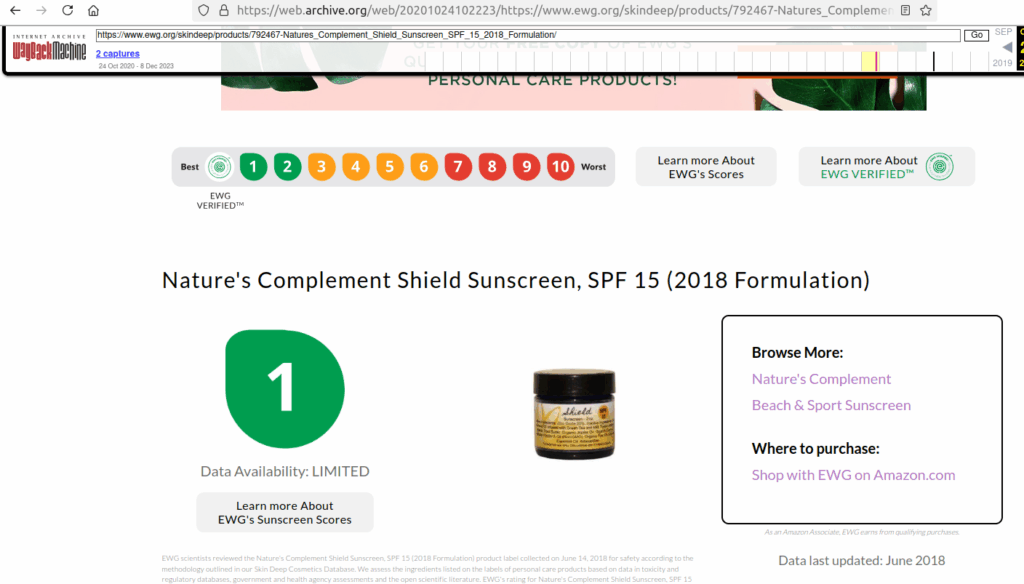
In 2018, our Shield Sunscreen formulation was evaluated within the EWG sunscreen database and received a rating of 1. The EWG rating system ranges from 1 to 10, with lower scores indicating fewer concerns related to ingredient safety and overall formulation profile.
You can view an archived version of the original listing here:
View archived EWG listing (Wayback Machine)
Note: This link directs to an archived snapshot of the original listing, preserved for reference.
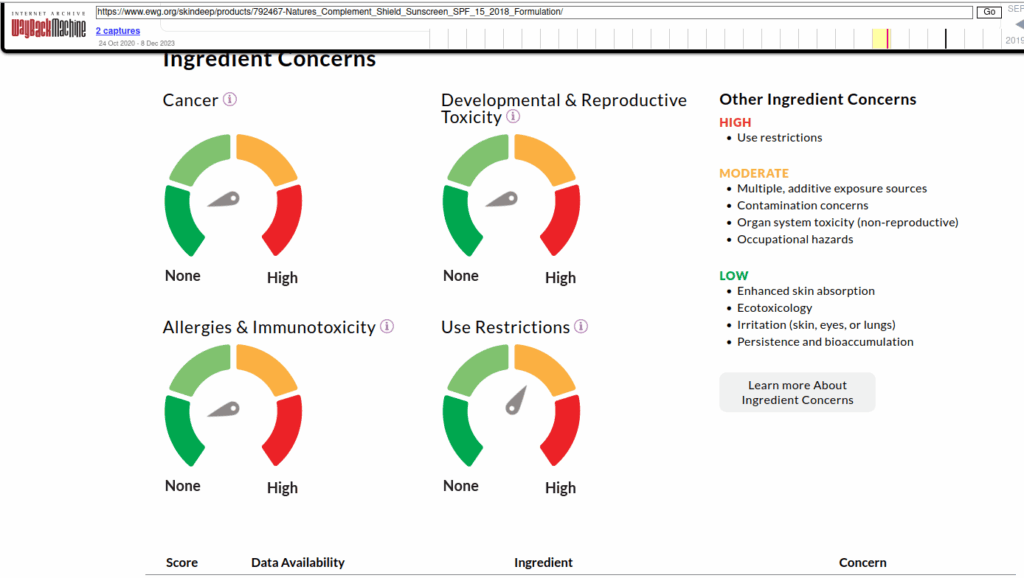
At the time, the evaluation also included a breakdown of factors such as ingredient hazard concerns including cancer risk, developmental and reproductive toxicity, allergies and immunotoxicity, and use restrictions. These scoring elements were designed to provide consumers with a simplified overview of formulation considerations.
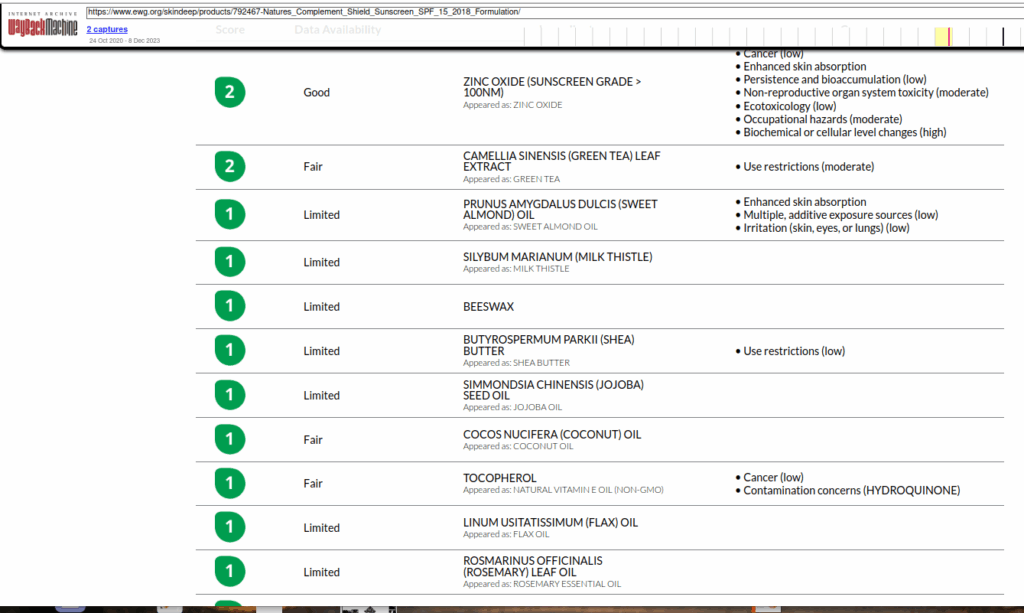
A more detailed review of the formulation showed how individual ingredients contributed to the overall assessment. This level of transparency is something we have always believed should be standard across the industry.
While the original EWG listing is no longer accessible, these archived images reflect how the formulation aligned with ingredient safety considerations at the time of evaluation.
Our approach has always gone beyond third-party scoring systems. Rather than relying solely on external ratings, we focus on ingredient selection, formulation design, and ongoing evaluation of scientific research.
While this evaluation reflects a specific point in time, the underlying formulation philosophy has remained consistent. The same approach to ingredient selection, transparency, and careful formulation continues to guide how our products are developed today.
Rather than relying on changing rating systems or external validation alone, we focus on maintaining a clear understanding of ingredient function, exposure, and long-term considerations. That consistency is ultimately more important than any single score.
If you are interested in understanding sunscreen formulations in more detail, including how SPF works and how to evaluate ingredient choices, we recommend the following articles:
SPF: What Does It Mean, and Why You Should Care
Do You Really Need a Sunscreen?
If you’re interested in how this product was developed, you can also read more here:
What It Takes to Bring a Quality Product to Market
Shield Sunscreen remains one of our most carefully developed products, shaped by both research and real-world use.
For Health,
Rob
Nature's Complement is a participant in the Amazon Services LLC Associates Program, an affiliate advertising program. If you purchase products on Amazon through any of our affiliate links, we get a small percentage of the transaction, at no extra cost to you. We spend a lot of time writing the articles on this site, and all this information is provided free of charge. When you use our affiliate links, you support the writing you enjoy without necessarily buying our products. (However we would appreciate if you would do that too!) Thank you for helping to support our work, however you choose to do so.
These statements have not been evaluated by the Food and Drug Administration. This information and/or products are not intended to diagnose, treat, cure or prevent any disease.