

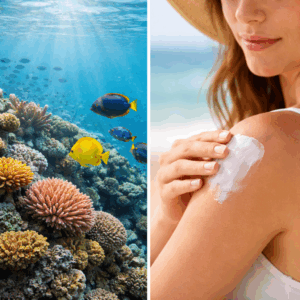
The Hawaiian state government made headlines when it passed legislation restricting the use of certain sunscreen chemicals, specifically oxybenzone and octinoxate. These ingredients are widely used in conventional sunscreens, and the stated motivation for the ban centered primarily on environmental concerns—particularly coral reef damage.
Last Updated: Apr 2026
That concern is valid. Research has demonstrated that these compounds can negatively impact coral development, contribute to bleaching, and disrupt marine ecosystems1. But what stood out to me was not what was said—it was what wasn’t.
Very little of the mainstream discussion addressed a more immediate question: what do these same chemicals do in the human body?
Many of the same studies that raised concerns about environmental toxicity also identified biological effects across multiple species. While marine organisms are not humans, toxicological principles do not stop at species boundaries. When compounds demonstrate endocrine or developmental effects in living systems, it raises legitimate questions about broader biological relevance.
Oxybenzone, for example, has been shown to exhibit endocrine-disrupting activity in laboratory models2. Octinoxate has also demonstrated hormone-related activity in experimental systems3.
Yet public discussion often stops at coral reefs.

One of the most important developments in recent years is the growing body of evidence showing that sunscreen ingredients are not confined to the surface of the skin.
A randomized clinical trial published in JAMA demonstrated that several common sunscreen active ingredients—including oxybenzone and octinoxate—are absorbed into the bloodstream at levels exceeding FDA thresholds for safety evaluation4.
This does not by itself define the full extent of risk, but it does confirm that these compounds are biologically available within the body and therefore relevant to systemic exposure and safety considerations.
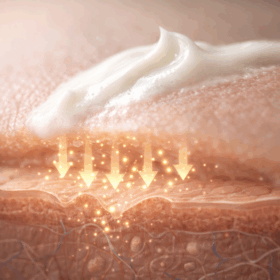
Industry responses to regulatory actions tend to frame the issue as a tradeoff: either use these ingredients, or increase your risk of skin cancer.
This is a false dichotomy.
Protection from UV radiation is important. That is not in dispute. But it does not follow that every available method of protection carries equal risk, or that alternatives do not exist.
Some organic UV filters have been shown under certain conditions to generate reactive oxygen species when exposed to UV radiation, particularly after prolonged exposure5. This introduces a more complex risk profile than the simple narrative often presented.
In addition, concerns around endocrine activity, bio-accumulation, and repeated exposure remain areas of ongoing investigation2,3.
While the science continues to evolve, the existing evidence raises enough questions to warrant closer scrutiny and a serious reevaluation of their use.
Sun protection should not be reduced to a single product category. Physical barriers such as clothing, shade, and timing of exposure remain foundational strategies.
Among topical options, mineral-based ingredients such as zinc oxide have been widely studied and are generally recognized as having a different safety profile compared to many organic UV filters6.
This difference is important, because it highlights that not all sunscreen approaches carry the same level of uncertainty or risk.
The takeaway is that this requires attention, and not indifference. These are factors worth understanding and considering when making decisions about sun protection.
Consumers should understand that product performance, regulatory approval, and long-term biological impact are never perfectly aligned. Ingredients that are permitted for use are not necessarily free from ongoing scientific debate.
Reading labels, understanding ingredient classes, and being open to alternatives are all part of making informed decisions.
There are ways to protect your skin effectively while also being mindful of both environmental and biological considerations.
That balance is where better decisions are made.
If you want to explore this topic further, we’ve written in more detail about sunscreen ingredients, SPF testing, and how different formulations actually work in practice. These articles break down what is often simplified in marketing into the underlying science and regulatory framework.
You can read more here:
Do You Really Need a Sunscreen?
SPF: What Does It Mean, and Why You Should Care
For those looking for an alternative approach, formulations based on mineral UV filters such as zinc oxide, combined with carefully selected supporting ingredients, offer a different balance between effectiveness and exposure profile.
Our Shield Sunscreen was developed with that philosophy in mind, focusing on ingredient transparency, functional performance, and minimizing unnecessary additives. As with any product, we encourage you to evaluate the formulation and decide what aligns best with your priorities.
Learn more about Shield Sunscreen.
For Health,
Rob
References:
1. Downs CA, et al. Toxicopathological effects of the sunscreen UV filter oxybenzone on coral planulae. Arch Environ Contam Toxicol. 2016.
2. Schlumpf M, et al. In vitro and in vivo estrogenicity of UV screens. Environ Health Perspect. 2001.
3. Krause M, et al. Sunscreens: Are they beneficial for health? An overview of endocrine disrupting properties. Int J Androl. 2012.
4. Matta MK, et al. Effect of Sunscreen Application on Plasma Concentration of Sunscreen Active Ingredients. JAMA. 2019;321(21):2082–2091.
5. Hanson KM, et al. Sunscreen enhancement of UV-induced reactive oxygen species. Free Radic Biol Med. 2006.
6. FDA. Sunscreen Drug Products for Over-the-Counter Human Use; Proposed Rule. 2019.
Nature's Complement is a participant in the Amazon Services LLC Associates Program, an affiliate advertising program. If you purchase products on Amazon through any of our affiliate links, we get a small percentage of the transaction, at no extra cost to you. We spend a lot of time writing the articles on this site, and all this information is provided free of charge. When you use our affiliate links, you support the writing you enjoy without necessarily buying our products. (However we would appreciate if you would do that too!) Thank you for helping to support our work, however you choose to do so.
These statements have not been evaluated by the Food and Drug Administration. This information and/or products are not intended to diagnose, treat, cure or prevent any disease.